

























































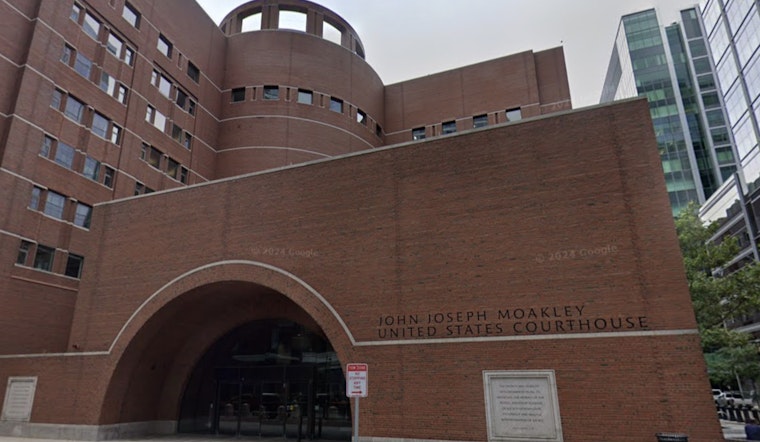
Federal prosecutors say a Boston-based license mill that quietly cranked out bogus IDs for years just lost a key player, after Gabriel Nascimento De Andrade pleaded guilty to his role in the operation.
De Andrade, a Brazilian national living in Boston without legal status, admitted this week in federal court to one count of conspiracy to unlawfully produce and possess identification documents with intent to transfer them. The scheme, according to court papers, was a multistate operation that routed real driver’s licenses to people who were never supposed to get them, using forged documents and tightly controlled mailing addresses. He faces up to five years in prison, with sentencing set for April 9, 2026.
Prosecutors say the ring ran from November 2020 through September 2024 and pushed more than 1,000 fraudulent applications through state motor vehicle systems, ultimately securing over 600 licenses for paying customers. Each customer was typically charged about $1,400. According to the U.S. Attorney’s Office, District of Massachusetts, the conspirators pulled in "hundreds of thousands of dollars" and leaned on mail-forwarding services, fabricated driver-education certificates and forged signatures to steer authentic licenses to addresses they controlled.
How prosecutors say the ring worked
Investigators allege the group turned online permit testing into a cheat-to-win system. Customers, prosecutors say, would send in photos of themselves, then members of the ring would hop online, take the permit tests on their behalf, and upload the customers’ photos when prompted so the IDs looked legitimate. They allegedly generated fake driver-education certificates to get those customers cleared for road tests. As reported by Boston 25 News, co-conspirators then arranged for the state to mail finished licenses to addresses under their control, later handing over the very real cards to clients in person.
Meeting in the Plymouth RMV parking lot
The case file offers one on-the-ground snapshot of how that allegedly played out. On April 24, 2024, charging documents say De Andrade met a person outside the Plymouth RMV branch, handed over a fabricated cable bill and took $400 in cash to help secure a Massachusetts license. The indictment also lays out dozens of similar moves that prosecutors say kept the machine humming, including setting up RMV appointments, obtaining purported foreign passports and transporting batches of licenses. U.S. Attorney’s Office
Sentencing and penalties
By pleading guilty to the conspiracy charge, De Andrade now faces a maximum of five years in prison, up to three years of supervised release and a potential $250,000 fine. U.S. District Court Judge Margaret R. Guzman has scheduled his sentencing for April 9, 2026.
He is not the only one already feeling the consequences. According to the U.S. Attorney’s Office, District of Massachusetts, two co-defendants have been sentenced: Cesar Agusto Martin Reis received 290 days behind bars, while Helbert Costa Generoso was sentenced to nine months in prison.
Why it matters
For investigators, this case is a cautionary tale about how even well-intentioned policy changes can open doors for scammers. New York’s Driver’s License Access and Privacy Act, better known as the “Green Light” law, allowed undocumented residents to qualify for standard licenses starting in late 2019. Massachusetts followed with the Work and Family Mobility Act, which took effect on July 1, 2023 and similarly lets all residents apply for a standard driver’s license regardless of immigration status. New York DMV and Massachusetts RMV
State officials in Massachusetts warned early on that bad actors might try to cash in on the rollout, and the RMV says it launched pre-registration tools and public outreach to blunt the impact of shady third-party operators. Federal prosecutors now point to this case as an example of how those predicted scams can operate at scale.
Authorities say the broader investigation is still active and that they intend to keep pursuing others they believe were involved. Those defendants remain presumed innocent until proven guilty in court. De Andrade’s sentencing hearing on April 9, 2026 is expected to shed more light on the scope of the scheme as additional court filings come in.



