

























































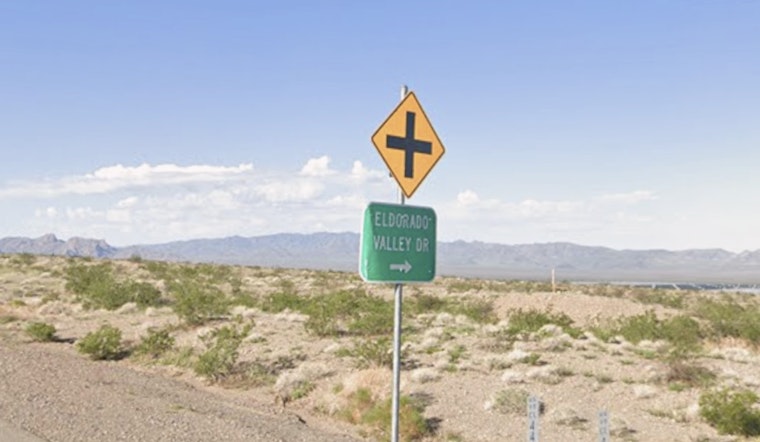
This fall, Boulder City voters will be asked a deceptively simple question with very large implications: should data centers be allowed on a vast stretch of city-owned desert in the Eldorado Valley Transfer Area, or should that land remain largely off-limits in the name of conservation and water security?
What’s on the Ballot
Ballot Question 1 asks whether “data center facilities” should be added as an approved land use in the Eldorado Valley Transfer Area, but only in portions outside the multi-species habitat conservation easement. Under Section 144 of the Boulder City Charter, voters have to sign off before any new use is allowed in the transfer area.
According to the Boulder City ballot packet, a “Yes” vote would not authorize construction of any particular project. Instead, it would simply give the City Council permission to consider lease proposals for data centers in the area.
The transfer area covers roughly 107,400 acres. City factsheets indicate that about 87,000 of those acres are already locked up as protected desert tortoise habitat. Finance materials show Boulder City bought the land in 1995 for about $1.28 million and now estimates that energy and related leases could generate roughly $1.336 billion over the next 70 years, along with up to $100,000 per year in property-tax revenue.
Developers' Pitch and Cooling Promises
One potential player has already stepped forward. A company tied to the Townsite Solar 2 name has told city planners it could build a data center campus in the area while sharply limiting water use by relying on reclaimed wastewater or switching to air (dry) cooling, according to the Las Vegas Review-Journal.
Federal paperwork for Townsite Solar 2 shows the project is associated with Skylar Energy Resources, with a Houston address listed in federal land records. That helps explain why developers, in materials provided to staff, are emphasizing low-water cooling strategies; see Bureau of Land Management filings for the Townsite Solar 2 project.
Water and the Grid
Water is the constraint that hangs over everything. Boulder City currently sends more than a million gallons of treated wastewater every day to evaporation ponds instead of routing it back to Lake Mead.
The Southern Nevada Water Authority is studying whether that treated effluent can be upgraded for irrigation or returned to the reservoir to earn return-flow credits. Planning documents outline options that include direct reuse or recharge wells, and the project is also the subject of a federal planning application; see Southern Nevada Water Authority materials and a U.S. Bureau of Reclamation planning submission.
Regionally, policymakers have moved to limit evaporative cooling in new commercial development. That shift would push any new data centers toward air-cooled systems that use less water but more electricity, according to national coverage of the issue from the Washington Post.
Next Steps
The Boulder City Council voted on Feb. 24 to place the question on the municipal general-election ballot, and the statewide calendar lists the 2026 general election for Tuesday, Nov. 3, 2026.
In the meantime, the council is expected to take an initial look at what would be the city’s first data center proposal in upcoming meetings. Public hearings, along with the Southern Nevada Water Authority feasibility report, are likely to play a major role in how voters weigh the promised revenue and jobs against habitat protection and long-term water constraints. Local reporting has already mapped out the calendar and the competing arguments that will dominate the run-up to Election Day.
At its core, the decision is stark: pursue billions in potential lease revenue and the prospect of local jobs, or keep a tighter lid on development in the desert to protect habitat and preserve a stressed regional water supply. However Boulder City answers that question in November will echo through the Valley’s energy, land-use and water planning for years to come.




