

























































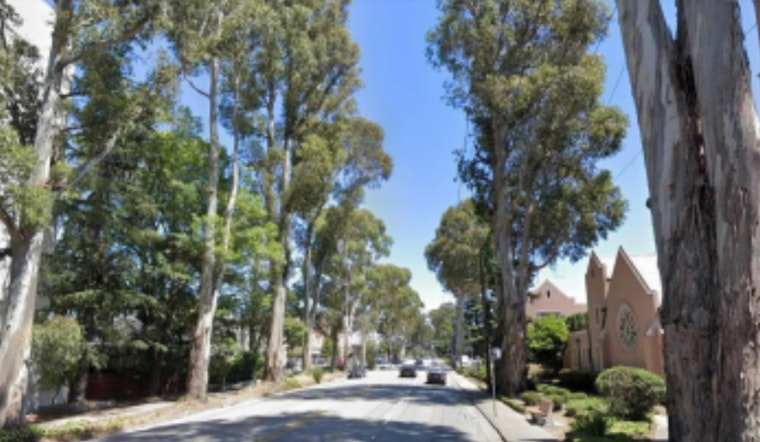
The eucalyptus canopy that has shaded Burlingame’s stretch of El Camino Real for generations is about to look very different. Nearly 300 of those towering trees are slated to come down as crews press ahead with a multi-year rebuild of the busy corridor, a state project aimed at fixing busted pavement, chronic drainage problems and aging, non-ADA-compliant sidewalks.
The Caltrans-led overhaul has cracked open a familiar local argument over safety, history and what, exactly, El Camino should look like in the coming decades.
How many trees and the official finding
According to Caltrans, the Build Alternative would require the removal of roughly 300 to 350 trees along the corridor. That includes about 250 of the 391 trees that contribute to the Howard–Ralston Eucalyptus Tree Rows, an impact the agency itself labels significant and not fully mitigable.
The environmental document explains that the project was approved after officials weighed the loss of historic trees against the need to rebuild failing roadway sections and improve pedestrian and drainage safety. In other words, in the state’s view, the street is simply in too rough a shape to leave things as they are.
Officials and neighbors react
Burlingame Mayor Michael Brownrigg told KRON4 that the same roots creating the leafy tunnel drivers love are also wreaking havoc underfoot. The trees have pushed and broken sidewalks to the point where, as he put it, “people lose tires on jagged concrete.”
Neighbors and preservation groups counter that the eucalyptus rows are central to Burlingame’s identity, a kind of living gateway to the city. The KRON4 report notes residents have been debating the removals for more than a year, and that the project is expected to wrap up by the end of 2029.
Why crews say the trees must go
City and Caltrans engineers point to a familiar list of problems: cracked pavement, rutted driving lanes, clogged clay storm drains and sidewalks that do not meet ADA standards. The final environmental review ties those issues directly to eucalyptus root intrusion, arguing the trees and the infrastructure are quite literally working against each other.
The document models a construction period of about 36 months, with work staged block by block so crews can keep access open for residents and businesses while they dig, pour and repave. That phasing plan is laid out in detail by Caltrans.
Replacement trees and undergrounding
The City of Burlingame’s project page says tree removal has already started on the northbound El Camino Real while drainage upgrades move ahead on the southbound side. City officials say they are working closely with Caltrans on how and when each segment of the work rolls out, and how they will keep residents in the loop.
To make room for future planting and clear up the tangle of overhead lines, the city has created an El Camino Real Underground Utility District to pursue utility undergrounding. Officials say dropping the wires below ground would open up space for larger replacement tree species. Local reporting indicates that many of those replacement trees are expected to be elms.
Historic trade-offs and next steps
The Howard–Ralston Eucalyptus Tree Rows are listed on the National Register of Historic Places and have been at the heart of preservation fights for decades, according to the Burlingame Historical Society. Losing a majority of the contributing trees is a serious blow for those who see the rows as part of Burlingame’s architectural and cultural DNA.
Caltrans and the city say a detailed tree-replanting plan will be drawn up during the project’s design phase, in coordination with the State Historic Preservation Officer and local advocates. Species choices and exact planting locations, though, will be constrained by existing utilities unless undergrounding goes forward in key segments.
What residents should expect
Construction will roll out across the roughly 3.6-mile corridor in phases so the pain is spread around rather than concentrated in one long, drawn-out nightmare. Drivers and pedestrians can expect temporary lane and sidewalk closures, along with both daytime work and some targeted night shifts when traffic is lighter.
City and Caltrans officials say they will run a public information program, posting updates, traffic advisories and contacts on the project’s webpage so residents and businesses have a place to check what is happening on their stretch of El Camino before the cones and chainsaws show up.




