

























































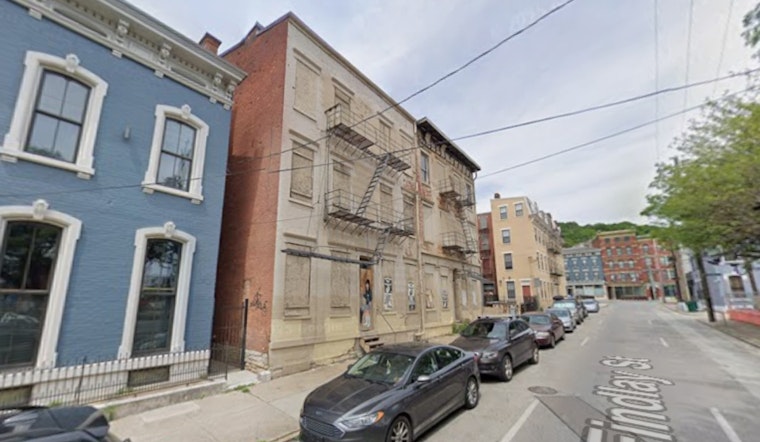
Two crumbling 19th century buildings across from Findlay Market are at the center of the latest fight over what to do with long-neglected properties in Over‑the‑Rhine. A local preservation nonprofit says the structures are unsafe and argues it would be cheaper, safer, and smarter to stabilize them now instead of watching them rot.
OTR Adopt filed a complaint on Feb. 5 in Hamilton County Common Pleas Court against 20 Findlay LLC, the company that owns the neighboring buildings at 20 and 22 Findlay St, according to reporting by Local 12. The filing says the two structures are three stories tall, total roughly 3,600 square feet, and date to 1865. OTR Adopt is asking a judge to let the group step in, stabilize the properties, and then hand them off to a developer instead of leaving them vacant and deteriorating.
Part of a Long-Running Neighborhood Struggle
Vacant buildings and code fights have been part of the Over‑the‑Rhine story for years, and the Findlay Street pair fit neatly into that pattern. As WCPO reported, a previous owner in the neighborhood drew city warnings and a court order over a cluster of OTR properties that included the Findlay addresses. That kind of history helps explain why preservation advocates are pushing the court to act quickly this time around.
Who Holds the Titles
Property transfer records show the addresses moved into the hands of an entity called 20 Findlay LLC in 2019, according to Buckeye Reporter. OTR Adopt describes itself as a preservation nonprofit that helps shepherd vacant historic buildings toward responsible owners and rehabs, according to OTR A.D.O.P.T.. The buildings sit just north across Findlay Street from the forthcoming Over‑the‑Rhine Community Center, which means their battered condition is hard to miss for residents and market visitors.
Why the City Is Involved
The city of Cincinnati says the current owner owes about $77,500 in vacant building fines, license fees, and abatement costs, according to business reporting from Local 12. That unpaid total is a key part of OTR Adopt's argument that the public interest is being harmed while the buildings sit empty. The court will have to decide whether the combination of outstanding fines and safety concerns is enough to justify shifting control to a group that wants to stabilize the properties.
Legal Implications
Courts can appoint receivers or order abatement when a building is declared a public nuisance, as WCPO has documented in earlier Over‑the‑Rhine cases. If the Hamilton County Common Pleas Court sides with OTR Adopt, the nonprofit could secure and stabilize the buildings, then bring in a developer to complete a rehab under court oversight. If the owner steps in, fixes violations, or pays what is owed, the court could let 20 Findlay LLC keep the titles and control.
The Feb. 5 complaint is still pending in Hamilton County Common Pleas Court. The next real clues about which way this is heading will come from the docket, as new motions and hearing dates show whether the nonprofit's strategy gains traction.





