

























































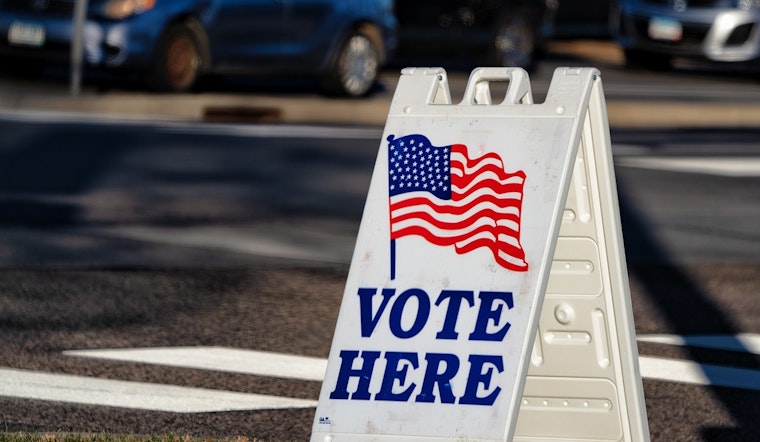
Boston’s long‑running fight over whether some noncitizen residents should get a say at the ballot box is back on the agenda at City Hall.
Led by Councilor Julia Mejia, a bloc of Boston City Councilors moved this week to revive a proposal that would let immigrants with legal status vote in city elections. The measure was refiled and sent to the Government Operations Committee for a hearing, a procedural step that quietly restarts one of the council’s more contentious debates.
The new filing closely tracks a home‑rule petition first introduced in 2023. That proposal would allow “legal residents” age 18 and older to be added to a special Boston voter list for municipal offices only, with an explicit ban on voting in state or federal races, according to the City Council docket. That petition text also notes estimates that immigrants with legal status make up roughly 28 percent of Boston’s population and contribute about $2.3 billion in taxes each year.
As reported by the Boston Herald, Mejia’s new order bears the signatures of seven councilors and was routed to the Government Operations Committee this week. The Herald casts the renewed effort as unfolding against what it describes as an escalating federal immigration crackdown and a flurry of legal attacks on sanctuary policies.
Supporters frame this as representation
Backers of the plan say it is about basic fairness for longtime residents who are deeply rooted in Boston but still lack a political voice. They point out that many immigrants with legal status pay local and state taxes, send their kids to Boston schools and rely on city services, yet cannot vote on who runs those systems.
The petition argues that allowing legal residents to cast ballots in city races would strengthen representation and civic participation. It also highlights immigrant households’ “collective spending power” as part of the case for giving them a formal say in local decisions, according to the council filing on Legistar.
Opponents worry about legal and personal risks
Critics on the council counter that voting in American elections has long been tied to citizenship, and they warn that tinkering with that line could backfire on the very people the measure claims to help.
They argue that any confusion over who is allowed to vote could put an immigrant’s path to naturalization at risk, especially in a climate of aggressive federal enforcement. Councilor Ed Flynn has raised that concern in earlier debates, stressing that the right to vote should remain reserved for U.S. citizens, as reported by Boston.com.
The timing is not subtle. The U.S. Justice Department sued Boston last year over its sanctuary‑policy rules, a move that local officials say has raised the stakes around how far the city can go in shielding or empowering immigrant residents. Coverage of the 2025 lawsuit noted that the DOJ named the city and Mayor Michelle Wu in litigation challenging Boston’s limits on cooperation with federal immigration arrests, according to NBC Boston.
What comes next
Even if the council once again supports the measure, it still faces a steep climb at the State House. Any change would require approval from the Legislature and the governor, which has stalled similar efforts in the past.
For now, the matter is formally back on the council’s docket and sits with the Government Operations Committee, which will schedule a public hearing. That session is expected to draw city election officials, immigrant advocates, legal experts and opponents to weigh in, according to the council’s February 2026 docket and prior coverage of the 2023 vote by the Boston Globe.
Legal and legislative hurdles
The path Mejia and her allies are pursuing, a home‑rule petition, requires the City Council and mayor to send a special‑law request to Beacon Hill. From there, it would need sign‑off from the Joint Committee on Election Laws and majority votes in both legislative chambers before it ever lands on the governor’s desk.
All of this is playing out while federal litigation over Boston’s sanctuary policies is still active, an added layer of uncertainty about how state and federal authorities might respond to any local move to expand voter eligibility, per the city docket and local reporting.





.jpg)