

























































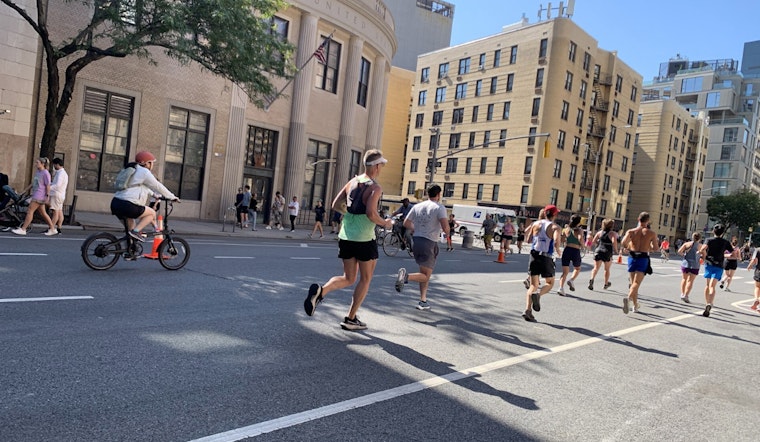
New York City’s political class is putting the squeeze on the Department of Transportation, urging the agency to turn its popular but short-lived Summer Streets program into a longer, fully connected car-free network that actually links neighborhoods together.
In a letter sent this week to DOT Commissioner Mike Flynn, 29 current and former elected officials called on the agency to extend the program’s hours, add more dates and tie together the scattered corridors into seamless routes so people can walk and bike across wide stretches of the city without hitting traffic-clogged gaps. The signers argue that a stronger Summer Streets would cut emissions, make streets safer and push more customers toward local small businesses.
The packet, signed by Brooklyn Borough President Antonio Reynoso, Queens Borough President Donovan Richards, City Council Speaker Julie Menin, Rep. Jerry Nadler and others, lays out a clear wishlist, according to the letter. The officials repeat their call for more Summer Streets dates and continuous routes and credit the existing program with “reduced emissions, safer streets, improved public health outcomes, and stronger community ties.”
What DOT Is Hearing
As detailed by Streetsblog New York City, the officials are not impressed with a handful of Saturdays in July and August that run for roughly eight hours at a time and then hand the streets back to cars. They want something that feels less like a pop-up festival and more like a real network.
DOT spokesman Vin Barone told Streetsblog the agency “appreciates the support from elected officials for pedestrian- and cyclist-centered streets” and said DOT is “discussing exciting new ideas for Summer Streets this year and in the years ahead.” Between the lines, the message from lawmakers is that a wildly popular program should be treated as infrastructure, not a seasonal novelty.
How Summer Streets Got This Big
Summer Streets launched as a small city pilot back in 2008 and has been steadily scaled up. The biggest recent jump came when the Adams administration and DOT brought car-free programming to all five boroughs on select Saturdays.
In 2025 the city opened more than 22 miles of streets to car-free use on scheduled dates, according to a Mayor's Office announcement. That year, Manhattan’s route essentially stretched from the Brooklyn Bridge all the way to Inwood. Coverage at the time highlighted the citywide programming and community events that made the expansion hard to miss for anyone spending a summer weekend outside.
Advocates See An Opening
Public space advocates did not wait long to cheer on the latest political push. Open Plans previously praised the move to bring Summer Streets to all five boroughs and has pressed DOT to treat the program as a vehicle for lasting, equitable improvements to the public realm rather than a string of one-off street parties.
Transportation Alternatives has gone further, folding the idea of a linked, year-round open streets system into its broader Streets and Transportation platform. The group argues that continuous car-free routes can expand access to safe recreation and commerce across neighborhoods, according to Transportation Alternatives.
Funding And Practical Limits
There is one stubborn hurdle that even the most enthusiastic Summer Streets fan cannot sidestep: money. Supporters of expansion acknowledge that a larger, longer program needs more funding and more staff time.
Critics point out that Mayor Zohran Mamdani’s proposed budget set aside about 2 million dollars for Summer Streets and Open Streets combined, while advocates say DOT had pegged the cost of operating at pandemic-era scale closer to 5 million dollars, a shortfall highlighted by Planetizen. On top of that are the logistics: staffing street closures, coordinating with transit and managing rest stops and other programming.
For now, the letter from elected officials amps up the political pressure on DOT to turn short-term, well-loved events into a more permanent system of people-first streets. The agency has said it is open to new ideas. Whether City Hall and DOT can match that enthusiasm with funding and an operational plan is the part New Yorkers will be watching.





_and_12th_Street,_East_Village,_Manhattan.jpg)