

























































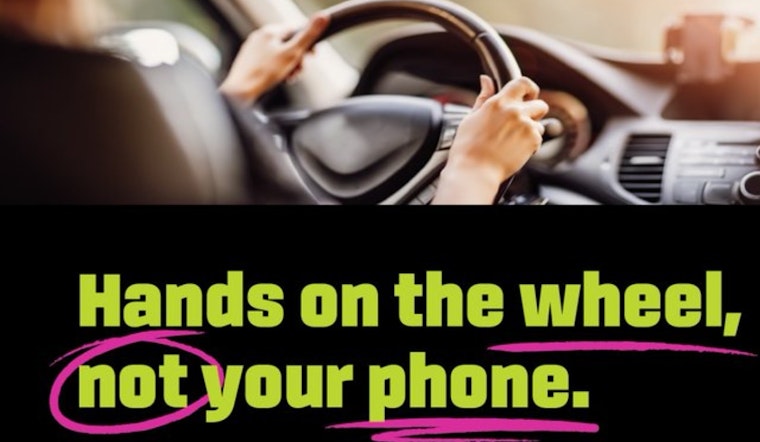
Colorado’s new hands-free driving law is already reshaping habits on the road, and state officials say it is paying off. A recent state analysis links the law to a 4.7% drop in distracted driving between 2024 and 2025, a shift that is credited with preventing nearly 600 crashes statewide. The update, posted March 31 as Distracted Driving Awareness Month approaches, ties the change to a mix of enforcement, public education, and telematics analysis.
According to CDOT, data from Cambridge Mobile Telematics show the statewide distracted-driving rate fell 4.7% year-over-year and that the decline corresponds to an estimated nearly 600 crashes avoided, more than 400 injuries prevented and roughly six lives saved. Cambridge Mobile Telematics has been measuring phone motion in trips and provided the modeling CDOT used to translate reduced phone motion into crash-prevention estimates.
How the data were measured
Cambridge Mobile Telematics’ telematics metric focuses on phone motion, tracking when a device moves with its screen on during a trip, and a statewide survey for CDOT backs up what that signal shows. Corona Insights’ 2025 Driver Behavior Survey for CDOT found fewer drivers reporting that they picked up a phone to make or receive a call (down 8%) and fewer reporting they sent messages behind the wheel (down 7%), providing behavioral context for the telematics numbers. Corona Insights lays out the methodology and sampling frame for the survey.
What the law does and the penalties
Colorado’s hands-free law, in effect Jan. 1, 2025, bans drivers from holding or handling a phone while driving unless it is used with a hands-free accessory and includes narrow exemptions for emergencies and certain public-service workers. Penalties start at a $75 fine and two license-suspension points for a first offense, and first-time violators can have charges dismissed by showing proof of purchasing a hands-free accessory. The provisions and exceptions are detailed on CDOT.
Enforcement, reaction and what’s next
State troopers and local police have stepped up enforcement as the law has rolled out, and law-enforcement messaging now regularly spotlights distracted driving as a major crash factor. Colorado State Patrol notes that crash investigators routinely link distraction to injury and fatal crashes, and Cambridge Mobile Telematics’ public-sector lead, Tim Vogel, has said hands-free laws “work” and that modest reductions in phone motion can prevent crashes. Cambridge Mobile Telematics supplies the modeling behind CDOT’s prevented-crashes estimate, and national partners are aligning enforcement campaigns for April; the NHTSA “Put the Phone Away or Pay” mobilization will include a high-visibility enforcement window in early April. NHTSA provides campaign materials and dates.
Officials stressed the gains are fragile and urged drivers to make small changes, such as using dashboard mounts, Bluetooth pairing or built-in vehicle tech that removes the need to handle a device. CDOT leadership has emphasized that no phone interaction is worth a life, and agencies say continued enforcement and public education will determine whether the early reductions hold.




