

























































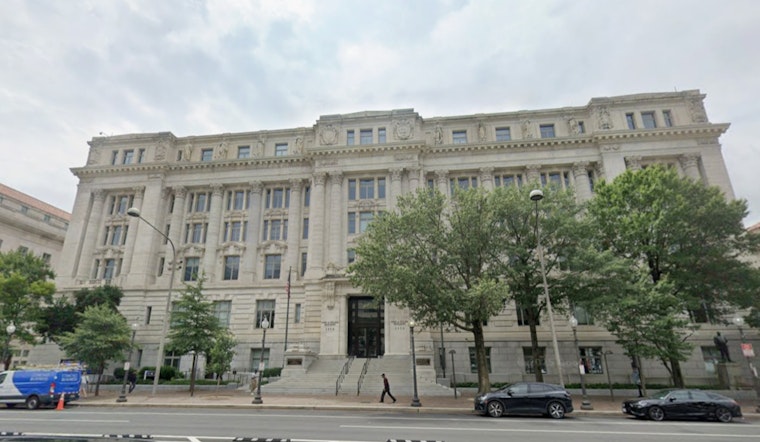
The D.C. Council is turning up the lights on federal law enforcement in the District, advancing two emergency measures on Tuesday that aim to pull back the curtain on how federal officers operate alongside the Metropolitan Police Department. One bill targets body-camera disclosures, the other tightens arrest reporting, and both now head to the Council's Judiciary and Public Safety Committee for scrutiny.
What the body-cam bill would do
One proposal - formally titled the Body-Worn Camera Transparency for Use of Force Amendment Act of 2026 - would require MPD to add body-camera footage and the names of federal officers involved in officer-involved deaths or serious uses of force to MPD's public database and to log federal officers present at daily MPD roll calls, according to TrackBill. Legislative tracking shows the bill was filed in late February and formally referred to committee on March 3.
As outlined by Brooke Pinto's office, the measure keeps existing consent rules in place - next-of-kin consent for footage involving a death and victim or guardian consent for serious use-of-force incidents - while expanding which officers and agencies must appear in MPD public records. Councilmember Pinto and Council Chair Phil Mendelson are listed as sponsors.
The arrest-reporting measure
The second proposal, the Full Accountability in Arrest Reporting (FAAR) Emergency Amendment Act, focuses on what happens when officers actually put cuffs on people. It would require MPD to document when federal officers are present at arrests, record any use of force by those federal officers, and publish MPD body-camera footage when federal agents are involved, as reported by Free DC. The group says Councilmember Robert White introduced the emergency amendment and lists several co-sponsors who have signed on.
Why supporters call it urgent
Supporters point to recent episodes where federal roles were murky or missing on paper. One flash point is an October 2025 traffic-stop shooting in which a Homeland Security agent fired into a car, an incident that was reportedly not fully reflected in MPD paperwork, according to NBC4.
The push is also colliding with national scrutiny of federal use of force. In January, federal agents shot and killed Alex Pretti in Minneapolis, a case that triggered calls for independent investigations and broader oversight of federal operations, according to AP.
What the bills mean legally
Both measures build in technical guardrails - such as preserving the existing consent exceptions for body-camera footage - but they also place explicit reporting duties on MPD that could rub up against the way federal agencies run their own internal reviews, according to materials summarized by TrackBill. The proposals would not force federal agencies to release their own internal video, but they would require MPD to record federal presence at arrests and to release MPD footage under District law when it is allowed.
Local reporting and reaction
Local outlets quickly picked up on the Council's move. DC News Now aired a segment on the push to increase transparency around federal use of force in D.C., while community groups pressed councilmembers to act fast on the emergency measures. Supporters say they plan to testify at upcoming committee hearings and will be lobbying for an expedited schedule.
Next steps
Both bills are moving under emergency rules and have been referred to the Committee on Judiciary and Public Safety for review, according to FastDemocracy, which mirrors the legislative record. If the committee signs off, the full Council could take final votes in the coming weeks, setting up new reporting requirements for MPD any time federal officers join local operations on D.C. streets.





