

























































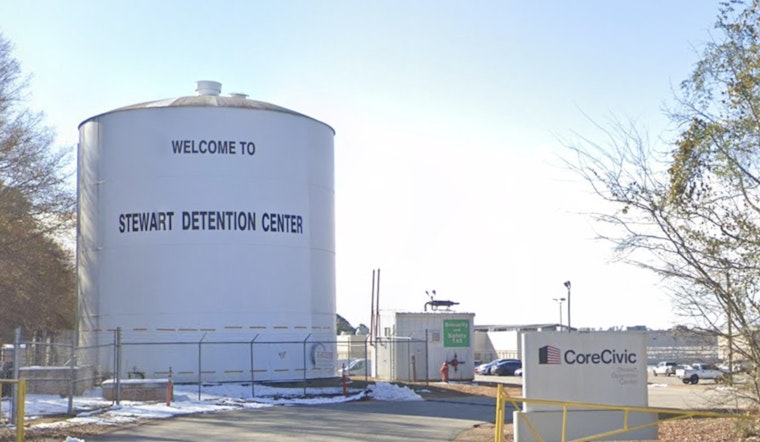
A 47-year-old Atlanta barber and double amputee has been held at the Stewart Detention Center in Lumpkin, Georgia, since January 2025 and now faces deportation while his family and legal team say his health is spiraling. His fiancée and attorneys argue that the remote facility has cut him off from reliable prosthetic care, basic hygiene and regular medical attention, and recent letters from members of Congress have cranked up the pressure on federal officials to release him.
On WABE's "Closer Look," host Rose Scott spoke with Atlanta-based immigration attorney Sarah Owings and Mildred Pierre, Taylor's fiancée, who described what they call unsanitary conditions at Stewart and an uphill battle to secure medical care. As reported by WABE, Pierre and Owings say Taylor has remained in detention since January 2025 and that staff have made it difficult for him to get needed prosthetic adjustments and consistent treatment.
What lawyers say in court filings
Taylor’s lawyers filed a federal habeas petition in September 2025 that lays out decades of medical surgeries, his dependence on microprocessor-controlled prosthetic legs and the ways detention has aggravated his condition. The petition states that his prosthetics require eight hours of overnight charging, but that Stewart has allowed only three to four hours, which has led to dead batteries, chafing, falls and other injuries. The filing asks a federal judge to free him while his immigration case moves forward, as detailed in the court filing.
Unhygienic conditions and mounting health problems
News reports and legal documents describe moldy showers, clogged drainage and episodes in which Taylor had to crawl through waste to reach hygiene facilities, circumstances that advocates say put his amputation sites at serious risk of infection. The Guardian reported that he has lost weight and been diagnosed with bone spurs and neuropathy, developments that have pushed lawmakers and local advocates to call for an urgent review of his detention.
Congressional pressure and letters
On Feb. 17, 2026, Rep. Pramila Jayapal and more than 20 House members sent a letter to DHS and ICE expressing "grave concern" about Taylor’s continued detention and urging officials to seriously consider releasing him. The letter spells out his medical situation and asks agency leaders to give "full and fair consideration" to his request for release from Stewart, according to the congressional letter.
ICE and CoreCivic responses
ICE and CoreCivic have publicly maintained that Stewart staff work to meet detainees’ medical needs, and CoreCivic told reporters it had coordinated care in Taylor’s case. Advocates and Taylor’s attorneys dispute those assurances, saying the facility’s actual practices, combined with a broader reduction in independent oversight of detention health care, leave medically vulnerable people at heightened risk.
Piloting the Journey: A moment of reflection
WABE’s episode pairs the Taylor coverage with a Women’s History Month segment featuring Dr. Kitty Carter-Wicker, a Morehouse School of Medicine professor who reflects on empathy and a three-decade medical career. Carter-Wicker, who serves as medical director for the Atlanta University Center Consortium’s Student Health and Wellness Center, uses the segment to highlight how local clinicians think about caring for people with complex needs, as noted by WABE.
What’s next
Taylor’s habeas case remains pending in federal court, and Magistrate Judge Amelia Helmick previously gave the Stewart warden 21 days to respond to the petition, according to reporting by The Atlanta Journal-Constitution. Local advocates say the case spotlights how remote detention centers like Stewart strain families and legal support networks, and they are pushing for immediate outside medical evaluations and an expedited legal review while the immigration proceedings continue.



