

























































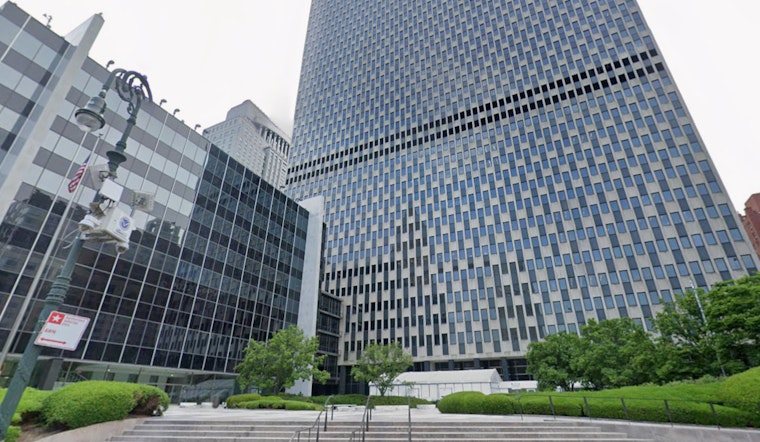
A former Bolivian anti-narcotics chief who once led his country’s top drug-fighting force will now spend a quarter-century in a U.S. prison, after a Manhattan federal judge sentenced him to 25 years for helping cocaine traffickers instead of stopping them.
On Thursday, Judge in Manhattan federal court handed down the sentence for Maximiliano Dávila Pérez, the ex-director of Bolivia’s Fuerza Especial de Lucha Contra el Narcotráfico (FELCN). A jury had already convicted him of conspiring to import massive quantities of cocaine and conspiring to use and possess machineguns. Prosecutors say Dávila Pérez effectively turned parts of his office into a protection service for traffickers, arranging armed guards and diversionary operations so cocaine flights could move through Bolivian airports. The conviction followed a weeklong trial in October and was announced Friday morning by Manhattan federal prosecutors.
Prosecutors Say He Turned Drug Cops Into Drug Guards
Federal prosecutors say that between roughly February and November 2019, while serving as FELCN’s top boss, Dávila Pérez used his position to arrange armed FELCN personnel to guard cocaine-laden flights and to steer investigative attention away from the real shipments. Those flights, prosecutors say, carried more than one metric ton of cocaine ultimately bound for New York.
Investigators backed up the case with recorded meetings and intercepted phone calls, among other evidence, according to the U.S. Attorney’s Office, Southern District of New York. In court, prosecutors painted a picture of a top cop who used the badge not just as cover, but as a tool to keep traffickers safe and profitable.
Officials Call It A Deep Betrayal
U.S. Attorney Jay Clayton said the former counternarcotics official chose “crime and profit over the public interest,” while DEA Administrator Terrance Cole labeled Dávila Pérez’s conduct a “betrayal of public trust” in a post shared by the U.S. Attorney’s SDNY account on X that linked to the office’s release. Prosecutors said the 25-year sentence, plus five years of supervised release, reflects what they characterized as high-level narco corruption that helped push cocaine straight into American cities, including New York. The SDNY post linked out to the full press statement on the Justice Department site, according to U.S. Attorney SDNY on X.
From Extradition To Manhattan Jury Verdict
Dávila Pérez was extradited from Bolivia in December 2024 after courts there signed off on a U.S. request, according to contemporaneous reporting, and he was brought to New York to face the charges. He went on trial in Manhattan in October 2025 and was convicted by a jury. Court filings and the government’s public account of the case point to undercover work by DEA confidential sources and recorded meetings as key pieces of evidence.
What The Charges Looked Like On Paper
The superseding indictment charged Dávila Pérez with conspiring to import cocaine in violation of 21 U.S.C. 959 and 963, and with conspiring to use and possess machineguns in furtherance of that drug conspiracy under 18 U.S.C. 924(c). The charging documents also include forfeiture allegations tied to the alleged trafficking scheme. For the exact statutory counts and detailed allegations, prosecutors pointed to the indictment and related filings on the U.S. Attorney’s Office docket.
Why This Case Stood Out
American prosecutors do not often bring cases against senior foreign law enforcement officials, but here they argued that a high-ranking cop turned the power of the state into a shield for international trafficking. U.S. authorities say that kind of official protection greases the wheels of the global cocaine trade and feeds violence and addiction in cities like New York. Before the conviction, the U.S. State Department had publicly offered up to a 5 million dollar reward for information leading to Dávila Pérez’s conviction, according to prior reporting.
Under the sentence, Dávila Pérez will serve 25 years in federal prison followed by a five-year term of supervised release. Prosecutors have also signaled they may move to seize assets they say are tied to the trafficking scheme. The U.S. Attorney’s Office has said the case was handled by SDNY’s National Security and International Narcotics Unit and prosecuted by Assistant U.S. Attorneys Matthew J. C. Hellman, David J. Robles, and Chelsea L. Scism.




