

























































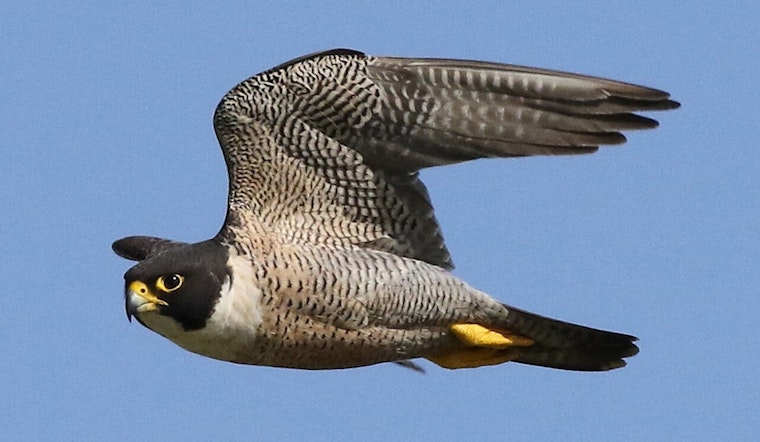
Peregrine falcons are clocking back in at some of Wisconsin’s unlikeliest high-rises: nest boxes perched on power plant stacks in Oak Creek, Port Washington, Milwaukee’s Valley plant and Weston. As the state’s nesting season gets underway, a mix of veteran, banded birds and unbanded newcomers are settling in on camera, with eggs expected within weeks and another chapter in a decades-long recovery effort about to play out in real time.
Falcons Return To Power Plant Nest Boxes
On March 9, We Energies confirmed that peregrines have been spotted at all four nest boxes and flipped on the live camera feeds at Oak Creek, Port Washington, Valley and Weston so the public can watch courtship and nesting unfold, according to We Energies. The utility says the first eggs should land in the boxes within the next couple of weeks, with chicks likely hatching later this spring.
Who’s Nesting Where
Local reports have already turned the returning raptors into neighborhood regulars: Joel and Essity are back at Oak Creek; Hamm’s Solo is paired with an unbanded female at Port Washington; Barney is sharing the Valley Power Plant box with an unbanded female; and Sheldon is on site with a partner at Weston, according to CBS 58. Each plant’s nest box is wired to a YouTube camera, so viewers can drop in any time to see how the season is progressing.
Program By The Numbers
The utilities say their nest-box program dates back to the early 1990s and that 465 peregrine falcons have hatched at company sites, accounting for roughly 20% of all peregrines born in Wisconsin, according to We Energies. Tall power plant structures have effectively doubled as city cliffs, turning into dependable urban habitat for a species that was once nearly wiped out in the state.
The People Behind The Comeback
The rebound traces back to Greg Septon, who started the Wisconsin Peregrine Falcon Recovery Project in 1986 and has banded more than 1,500 chicks over the years, WISN reported. Septon and a crew of volunteers still handle nest checks and banding, while the utilities keep the nest boxes and webcams up and running.
When To Watch
The main show typically hits in late March and April, when eggs are laid and hatchlings begin to appear. Viewers are encouraged to track the utilities’ nest cams and social channels for updates, as local outlets have highlighted, including WBAY. Once chicks arrive, expect naming announcements and banding updates, along with a front-row look at the next generation of Wisconsin peregrines.



