

























































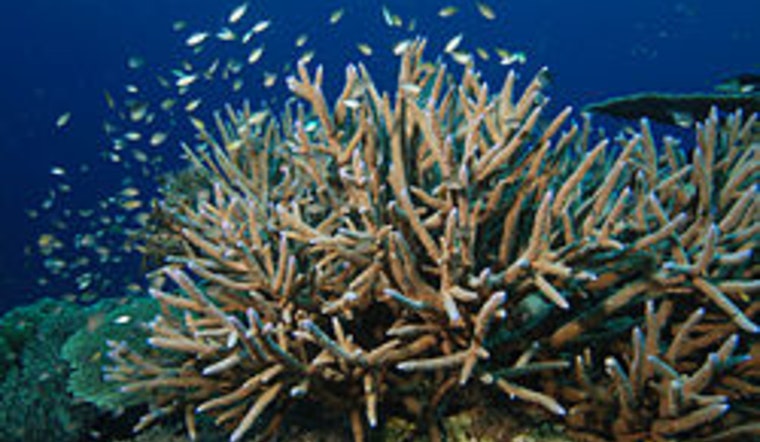
Less than a mile off Fort Lauderdale, tucked beside a heavily trafficked shipping channel, sits one of the last dense thickets of staghorn coral left in the continental United States. This unusually tough patch of reef, prized by scientists and dive boats for surviving recent marine heat waves and disease, now lies directly in the path of a federal proposal to deepen and widen Port Everglades. Regulators, researchers and local businesses are gearing up for a fight over whether rescue work and mitigation can honestly offset the damage that dredging may bring.
What the project would do
The Port Everglades Navigation Improvements Project calls for deepening and widening parts of the port’s entrance channel so larger cargo and tanker ships can move in and out. It is part of a roughly $1.35 billion package that the port says folds in significant environmental spending. According to Port Everglades, nearly half of the current cost estimate is set aside for mitigation, coral rescue work, land-based nurseries and water-quality monitoring. Port officials and planners argue the expansion is needed to improve safety, protect jobs and keep fuel and other essential goods flowing into South Florida.
A surprising coral stronghold
Federal scientists and aquarium researchers recently documented an unexpectedly dense reef system tucked near the port, estimating roughly 10 million individual corals in the area. That tally includes thousands of endangered staghorn colonies clustered within about a mile of the proposed dredging footprint. As reported by Inside Climate News, many of those corals are small, yet they are still reproductively active, which makes them especially valuable for rebuilding reefs elsewhere. Researchers say the density and mix of species here turn this site into a prime stronghold for broader reef recovery efforts in Florida.
Federal scientists raise the alarm
NOAA Fisheries warned the Army Corps of Engineers that approving the project “would result in the largest impact to coral reefs permitted in U.S. history,” according to a federal review cited in reporting. That warning, together with a joint NOAA and Shedd Aquarium analysis of how many corals live in the area, has pushed agencies to adjust sediment plume modeling, refine mitigation plans and stiffen monitoring thresholds. Those scientific red flags are a big reason regulators and conservation groups are scrutinizing the proposal so closely.
Lessons from Miami
Critics keep pointing to what happened at the Port of Miami in 2014 as the cautionary tale no one wants to repeat. Reporting and later scientific studies found that fine sediment and rubble kicked up by that dredging project smothered and killed large numbers of nearby corals. The Miami experience now surfaces regularly in coverage of Port Everglades as a case study in how big dredging jobs can produce broader, long-lasting ecological damage. That history helps explain why scientists and advocates say tighter limits and independent oversight are non-negotiable before any new digging starts.
What the port and the Army Corps say
Port Everglades officials say they recognize the environmental risk and insist a large chunk of the budget is devoted to doing the work in a less harmful way. Plans include using gentler dredging techniques where possible, halting work during key coral spawning windows and mounting a multi-year coral rescue and outplanting campaign. The Army Corps has already completed benthic reconnaissance and biological surveys that map out hardbottom, coral and seagrass habitat and identify where rescue and mitigation would be focused. Those technical studies are expected to shape whatever final permit conditions are imposed. Port leaders describe the mitigation package as one of the largest coral-protection investments ever attached to a U.S. dredging project.
Regulatory and legal crossroads
Conservation organizations took the Army Corps to court in 2016, arguing that its environmental review failed to fully grapple with risks to endangered species and critical habitat, according to a Center for Biological Diversity press release. Federal regulators still need to complete a biological opinion under the Endangered Species Act. Local 10 has reported that NOAA and the Army Corps are finalizing additional analyses and have discussed a potential construction window around 2028, depending on how permitting and litigation play out. Those pending federal reviews and active legal challenges mean the project is far from guaranteed.
What this means for local businesses and recreation
Charter captains, dive shops and other reef-focused tourism businesses warn that a badly damaged reef would ripple straight through their livelihoods and local fishing. Many of those operators already run trips over the same coral neighborhoods researchers are racing to safeguard. "It's going to hurt my business because it might kill the reef," Fort Lauderdale dive operator Bill Cole told The Washington Post. Local leaders now face a classic South Florida tradeoff: short-term gains from deeper berths and bigger ships, or the long-term economic value that healthy reefs provide for tourism, fisheries and natural storm protection.
What to watch next
NOAA’s pending biological opinion and the Army Corps’ final mitigation and monitoring plans will lay out the technical rules for how, and even whether, dredging can proceed. Those documents are expected to define acceptable sediment plume levels, priorities for coral rescue and benchmarks for long-term success. The National Oceanic and Atmospheric Administration’s Port Everglades Environmental Monitoring Project is already gathering baseline water-quality and seafloor data to inform those choices. In the months and years ahead, those scientific findings, along with any court rulings, will go a long way toward deciding whether this resilient coral pocket makes it through the project intact.
The bottom line
Scientists say there is a narrow window to shield a rare, recovering reef community that has already survived recent heat waves and disease outbreaks. Regulators now face a high-stakes test: sign off on deepening work that could expand trade and fuel delivery, or demand mitigation and safeguards strict enough to protect what may be one of Florida’s last natural strongholds for staghorn coral.



