

























































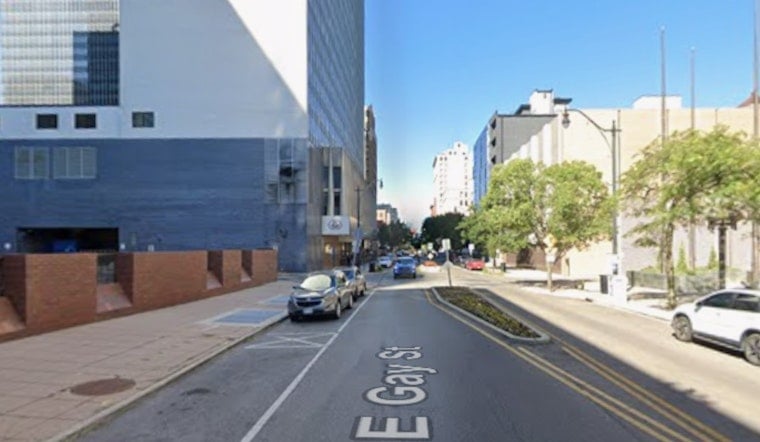
Construction fences are up and the jackhammers are out on Gay Street, as crews finally kick off work on the Capital Line, a long-planned two-mile pedestrian and bike corridor cutting through downtown Columbus. Phase one zeroes in on a three-block stretch of Gay Street between Fourth and Front streets, where the street will be rebuilt with wider sidewalks, dedicated bike lanes, new lighting and fresh street furniture.
Local TV outlet NBC4 reports that crews are now on site, marking the project’s shift from planning to visible dirt-moving. The project page at Downtown Columbus shows that Miles-McLellan has been hired to stabilize and fill the aging sidewalk vaults along Gay Street as one of the earliest steps. That page also includes a block-by-block construction map and a projected sequence for vault, utility and street-level work.
What Crews Will Do and When
The job starts underground, then slowly works its way to the surface. First up is vault and subgrade stabilization, followed by utility work, then the full street rebuild. Columbus Navigator outlines a phased rollout: an initial stabilization period, then a utility relocation window in the spring, and finally block-by-block resurfacing and public-realm upgrades running through roughly 2026–2027.
Officials say they will close individual blocks to vehicle traffic in short bursts while trying to keep sidewalks open so customers can still reach storefronts. The closures will be staggered along the corridor, rather than shutting down all of Gay Street at once, in an effort to keep downtown from grinding to a halt.
Small Businesses and Construction Support
The city knows a torn-up street can be brutal on small businesses, so a support program is being lined up alongside the construction itself. According to Columbus Underground, Downtown Columbus Inc. has pitched a mix of small grants plus rent or marketing help, all tied to a new Ground Floor Growth framework. City Councilmember Nick Bankston has been pushing to use the Gay Street work as a pilot for a broader construction-impact program across future projects.
Organizers told stakeholders at a recent meeting that, yes, it is going to be messy, but the goal is to keep doors open and signs visible while the heavy equipment does its thing.
Funding, Partners and the Bigger Picture
The Capital Line is expected to cost roughly $100 million and is being advanced as a public-private partnership, according to Columbus Business First. Downtown Columbus lists the State of Ohio, the City of Columbus and the Columbus Foundation among the current funders backing the work.
The project is being led by Downtown Columbus Inc. in partnership with city departments and private developers, including Edwards Companies, which helped shape the plan in its early rollout. The Capital Line route is designed to stitch together downtown attractions and new housing projects, including the Peninsula development, which last year announced a Giant Eagle Market District location. WOSU has previously reported on that grocery addition as a key piece of the downtown food puzzle. Downtown Columbus also reports about 13,513 people now living downtown, a number the Capital Line is meant to serve and grow.
City officials say the Gay Street phase is just the opening act. Once design details and a rhythm for community outreach are set, additional segments will roll out so the Capital Line forms a continuous, people-first loop through the core of Columbus. Drivers can expect periodic lane reductions and short-term block closures as the work hops from segment to segment. Residents and business owners are being urged to watch for construction updates, block-level timelines and business-support details on the Capital Line project site.
Sources: reporting by NBC4, project materials from Downtown Columbus, local coverage from Columbus Navigator and Columbus Underground, plus background from Columbus Business First and coverage of the Peninsula grocery announcement at WOSU.





