

























































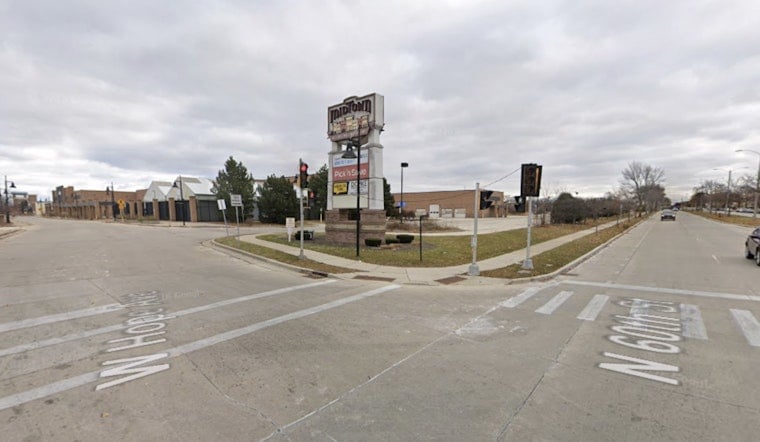
After years of big ideas that went nowhere, the long-quiet parking lot next to Milwaukee's vacant Midtown Walmart might finally be getting some real action. A 100-unit affordable apartment community called Midtown Commons is slated for a parcel east of N. 60th Street and north of W. Hope Avenue, on the city's northwest side. The plan calls for family-sized, income-restricted apartments that would rent below market rates, turning a sea of underused big-box parking into actual homes instead of empty asphalt.
Work on the first phase could start as soon as late summer, according to the Milwaukee Journal Sentinel. That projected timeline follows months of planning and financing work by the development team, which says it is in the final stretch of assembling tax-credit equity and other subsidies. The paper notes that any groundbreaking is still tied to the usual caveats: securing city approvals and closing the full financing package.
Midtown Commons already has a key piece in place. The 100-unit proposal won state backing in WHEDA's latest funding round and lists Wisconsin Preservation Fund, Gorman & Company and local firm One 5 Olive as partners, Urban Milwaukee reported. The financing stack is designed around 4% federal and 4% state low-income housing tax credits, paired with other subsidies to keep rents affordable. Developers say locking in those tax-credit milestones is critical before they can sell the credits to investors and move from paperwork to construction crews.
Site history and prior proposals
The site sits just east of the former Walmart at 5825 W. Hope Ave., which closed in 2016 and has been largely idle while a rotating cast of reuse ideas came and went. One of the more recent efforts - a 2023 proposal to convert the big-box building into a self-storage facility - was rejected, according to City Plan Commission minutes. That decision effectively pushed new development toward the surrounding parking fields rather than the former store itself.
Just across the way, the former Lowe's at 5800 W. Hope Ave. went in a different direction. It was converted in 2018 into a distribution center leased by Sellars Absorbent Materials, a shift that developers often cite as proof the corridor is already moving away from strictly retail uses, according to Area Development. In that context, apartments on a chunk of the old Walmart parking lot fit into a broader pattern of rethinking big-box real estate.
Next steps and approvals
Before any shovels hit the ground, the development team still has to clear the usual city hurdles. That includes zoning sign-offs and final approvals that typically run through the Plan Commission and the Common Council. As BizTimes has outlined, WHEDA's preliminary tax-credit approvals and the sale of that tax-credit equity are standard prerequisites for construction, and developers often wait until both are firmly in hand.
If the capital stack falls into place and permits arrive on schedule, the team hopes to begin site work this summer, then roll into full construction after that. In other words, the empty lot could spend its last season as overflow parking.
Why this project matters
Midtown Commons is part of a broader wave of subsidized housing efforts in Milwaukee following a recent round of WHEDA awards and shifting interest from developers. Urban Milwaukee and other outlets have noted that city officials increasingly favor denser, mixed-use redevelopment of struggling shopping centers instead of letting massive properties linger as vacant reminders of retail's past.
For nearby residents, the project promises new affordable housing options and some much-needed activity around a long-dormant site. For the city, it is a test of whether public financing tools and private partners can successfully turn an empty big-box landscape into a neighborhood with lights on and people living there, not just parking stripes fading in the sun.





