

























































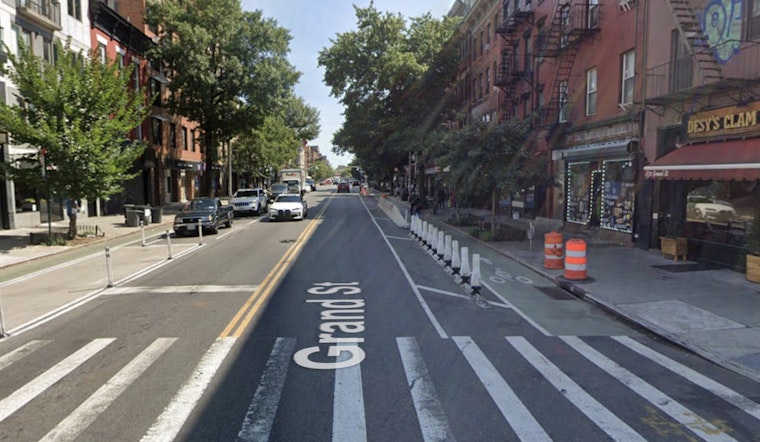
For months now, a hulking construction barrier on Grand Street in Williamsburg has turned a protected bike lane into a daily obstacle course, shoving cyclists out of their designated space and straight into live traffic, according to riders and neighbors. The setup squeezes the roadway so tightly that some cyclists weave between trucks and cars, while others hoist their bikes over the barricade just to finish their commute.
Video obtained by News 12 captures the scene in real time: riders veering around the barrier, some forced into the travel lane alongside moving vehicles, others stopping to lift bikes over the obstruction. Cyclists interviewed in that report did not mince words, calling the setup “unsafe” and saying it often leaves them with no real choice except to swerve into traffic.
DOT and Con Edison respond
The Department of Transportation has labeled the situation “unacceptable” and says it plans to coordinate with the contractor to clear the lane. A Con Edison spokesperson told News 12 that the barrier is in place to cover a temporary power cable and will be removed once electrical work is finished. Cyclists, though, argue that the issue has dragged on long enough that a quick fix is overdue.
A grim history on Grand Street
Grand Street has been under a safety microscope for years. In July 2016, a hit-and-run crash killed 35-year-old Matthew von Ohlen, a case that galvanized local demands for stronger protections and ultimately led to the driver’s manslaughter conviction, according to the Brooklyn District Attorney's office. That high-profile death, combined with recurring complaints about trucks and cars blocking the bike lane, has kept steady pressure on city agencies to fortify the corridor.
Advocates say design, not just enforcement, is the answer
Local advocates and elected officials have repeatedly urged DOT to upgrade Grand Street’s protection by swapping out plastic delineators for sturdier Jersey barriers or other heavy infrastructure, a campaign chronicled by the Brooklyn Paper. Riders and businesses argue that better street design, not just more tickets, is the only reliable way to keep cyclists from being squeezed into car traffic in the first place.
Reporting blocked lanes and enforcement limits
Cyclists who encounter an obstruction like the Grand Street barrier can file complaints about construction problems or blocked lanes through NYC DOT's customer service and the city’s 311 system, which DOT directs users to for street-works issues. But analysis by Streetsblog found that police issued summonses in fewer than 2% of 311 complaints about blocked bike lanes, a gap advocates say seriously undermines enforcement as a deterrent.
For now, DOT’s promise to work with the contractor is the immediate development that cyclists are watching. Riders say they will be looking for the barrier’s removal and pushing for permanent, physical protection along Grand Street. As one longtime cyclist summed it up, the street needs barriers that actually stop cars, not obstacles that force riders to climb over them.





