

























































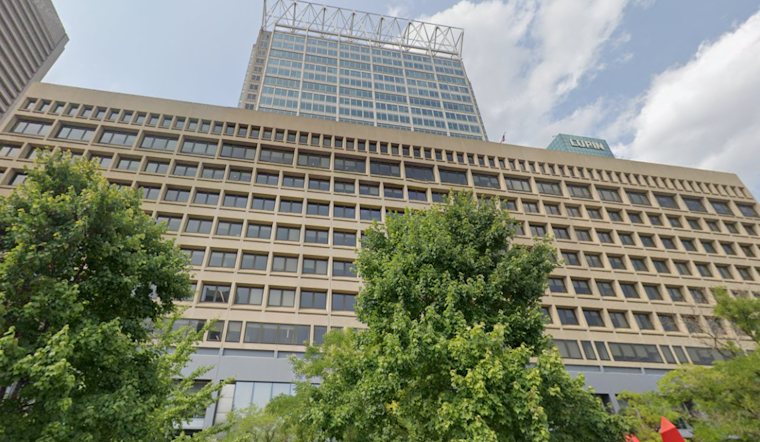
Baltimore’s 100 East Pratt tower, the 28-story office block that helps define the Inner Harbor skyline, has landed in receivership and is now being readied for a court-supervised sale, according to court filings and published reports. The move puts one of downtown’s biggest office properties on the market at a time when vacancy and softer values are reshaping the city’s commercial core, and local officials and developers say the outcome will help show whether Pratt Street can still lean on traditional office uses or needs a new playbook.
According to the Baltimore Business Journal, a receiver has been appointed to run the property and market it for sale under the eye of the court. The outlet reports that the filing follows mounting financial pressure at the tower and lays out a timetable for taking the building out to potential buyers.
Vacancy After Anchor Tenant Left
The building took its biggest hit when T. Rowe Price moved out, leaving roughly 450,000 square feet empty in a tower that brokers put at about 650,000 to 660,000 square feet. Bisnow reported both the departure and the scale of the vacancy, which industry sources say is the main reason lenders tightened their grip on the loan.
Loan Trouble And Special Servicing
Industry trackers say the building’s mortgage shifted into special servicing after the anchor tenant left, a step that often comes before a custodial receiver is installed or a court-ordered sale moves ahead when a borrower and lender cannot agree on new terms. ConnectCRE flagged the transfer and identified the loan as a likely candidate for a receivership process.
Broader Downtown Pressure
Analysts point to a flight to quality trend that has pulled major tenants toward newer, amenity-heavy projects like Harbor Point and Harbor East, leaving older Pratt Street towers fighting from behind. CoStar News and other regional data show elevated vacancy and weaker deal volume in Baltimore’s central business district, which in turn makes costly repositioning work tougher to finance. The Q4 MacKenzie market report also tracks rising vacancy in parts of downtown and softer pricing for large, older office properties, according to MacKenzie Commercial Real Estate.
What The Sale Could Mean
The receiver’s assignment is to sort through offers, seek court approval for a deal, and try to make secured creditors as a whole as possible while the building keeps operating. Any buyer that steps up will then face a high-stakes choice: pour money into upgrades to keep the tower largely as offices, or look at converting portions of it to other uses. As the Baltimore Business Journal notes, that strategy will depend heavily on what financing is available, how the city responds to any proposed changes, and whether the market can support a sizable repositioning.
Legal Note
Receivership sales are overseen by a court and a court-appointed receiver, who typically steps in after a loan moves into special servicing or a borrower defaults. The idea is to preserve the property and maximize what creditors recover while operations continue. Coverage of the loan’s transfer into special servicing outlines that sequence and explains why it often ends in a sale when borrower and lender cannot hammer out a quick resolution, as reported by ConnectCRE.





