

























































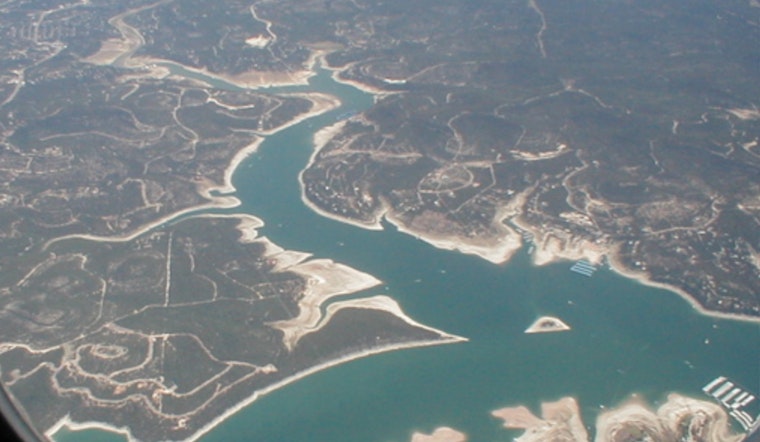
Central Texas’ big water buckets are lining up for a spring of wild mood swings, and they are not all pointed in the same direction. New projection scenarios from the authority that manages the Highland Lakes show Lake Travis and Lake Buchanan could head down very different paths this season depending on how much rain actually shows up. Lake Travis currently sits near 665.75 feet above sea level and about 76 percent full, while Lake Buchanan is still riding high after topping out last summer and is roughly 95 percent full. Together the two reservoirs supply water for more than a million people across Central Texas, so what happens with spring storms matters for both kitchen taps and weekend recreation.
The Lower Colorado River Authority runs a set of forecast scenarios labeled “wet,” “median,” “dry” and “extreme dry,” and they paint sharply different pictures for the two lakes. As reported by KXAN on March 6, 2026, LCRA’s “wet” scenario would likely push Lake Buchanan back to full pool by July 2026, while Lake Travis would need substantial, well timed runoff to climb to its full pool elevation of 681 feet. Under median or drier scenarios, KXAN notes Lake Travis is likely to decline slowly unless timely rain arrives.
What LCRA Is Asking
The Lower Colorado River Authority is telling customers and utilities to be ready to pivot, because lake conditions can flip fast. As outlined by LCRA, the authority’s Stage 1 drought contingency plan asks water users to trim consumption by about 10 percent and asks firm water customers, primarily cities, utilities and industries, to put mandatory curbs in place if certain thresholds are met. LCRA links those actions to combined storage triggers for Lakes Travis and Buchanan and publishes operational notices as lake levels and inflows change.
Numbers And Drought Context
Federal briefings that draw on Texas Water Development Board reservoir tables show the region is still operating with tight margins. The National Weather Service’s drought information statement listed Lake Travis near 667 feet and roughly 78 percent full and Lake Buchanan in the low 90s percent full in early February 2026, and it noted that streamflows across much of Central Texas remain below normal. That combination of below normal flows plus uncertain spring rainfall is why projections for the coming months split so widely depending on where and when storms actually hit the basin.
Local Impacts And What To Watch
Some local utilities are already tightening the screws a bit. Pflugerville moved to mandatory Stage 1 watering restrictions effective March 1, a change reported by Community Impact. Other cities that pull from the Highland Lakes could follow with similar rules if combined storage for Lakes Travis and Buchanan drops toward trigger levels in the coming weeks.
Residents and boaters who live by the water level report can track gates and levels in near real time. LCRA’s Hydromet and Flood Operations Notification Service provide gate operations information and operations alerts, which are available through LCRA for up to the minute lake elevations and dam operations.
For Central Texans, the bottom line stays simple even if the models are complicated. Conservation matters now, and forecasts matter more than ever. Keep an eye on LCRA’s combined storage numbers and short range rainfall patterns this spring, because those two signals will decide whether the Highland Lakes creep back toward full pool or whether tighter watering curbs land on more front yards.





