

























































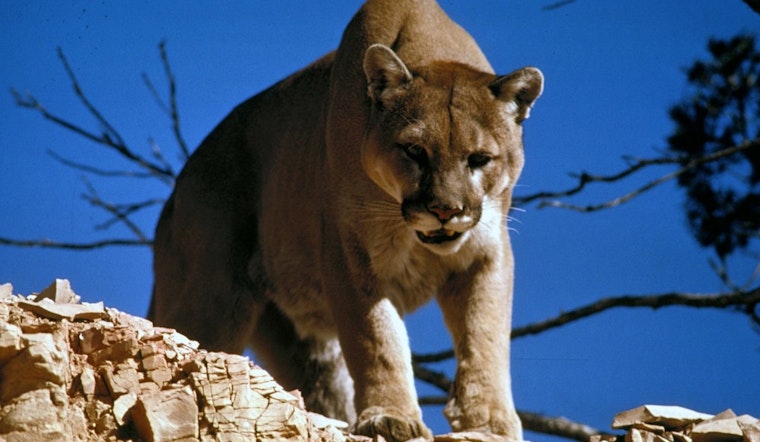
A $5.5 million state planning grant has catapulted a long-discussed pair of wildlife overpasses on State Route 62 from wish list to serious design work, in what advocates say could be a make-or-break moment for two fragile mountain lion populations on the brink of local extinction. The money will cover engineering, environmental review, and wildlife studies, but not construction, so a second, tougher race for funding still lies ahead. Planners want the bridges to be lush with native plants and shaped like natural ramps into the desert hills so animals hardly notice they are crossing a highway at all. Biologists warn that isolated lion groups and steadily growing traffic leave very little room for error as the region tries to undo decades of habitat fragmentation carved by SR 62.
The Wildlife Conservation Board approved the $5.5 million grant for the Mojave Desert Land Trust to handle environmental review and design work for two overpasses on SR 62, according to the Governor’s Office. The three-year award is expected to take the projects to roughly 65 percent design completion and will pay for technical studies, engineering, and stakeholder outreach, with Caltrans as the transportation agency partner and the Coachella Valley Conservation Commission and Mojave Desert Resource Conservation District listed as local partners, according to the Mojave Desert Land Trust. Once the plans are drafted, construction money will still have to be scraped together through state budgeting and other funding sources.
Where the crossings would go
The overpasses are planned for the Morongo Grade and the Yucca Grade, two steep, high-speed stretches where SR 62 slices between the San Bernardino and Little San Bernardino mountains and effectively walls off wildlife on either side. A 2021 Morongo Pass connectivity study by consulting firm Dudek and the UC Davis Road Ecology Center flagged those locations as critical pinch points after camera monitoring, track surveys, and collision analysis, and recommended wildlife overpasses as the fix, according to the UC Davis Road Ecology Center. The project’s California Environmental Quality Act paperwork formalizes that planning work, lists the involved parcels, and defines the study area; the notice was posted in March 2026 on CEQAnet.
Why the project matters for mountain lions
Conservationists say these overpasses are not a luxury item; they could decide whether two local mountain lion groups manage to hang on at all. The Eastern Peninsular Range population and the San Gabriel–San Bernardino population are both small and genetically isolated, cut off from the broader California metapopulation by roads and development. Earlier this year, the California Fish and Game Commission moved to list six isolated mountain lion populations as threatened under the California Endangered Species Act, giving state agencies new leverage to demand wildlife connectivity and recovery plans. Without new movement corridors in the Morongo Basin, scientists warn that inbreeding and vehicle strikes could push the local cats toward collapse, according to the Los Angeles Times.
Safety, science, and what the crossings would do
Trail cameras and other monitoring already show mountain lions and other large mammals lingering in habitat right up against SR 62, and earlier surveys documented hundreds of wildlife deaths along sections of the highway, including a radio-collared lion that was hit by a vehicle. The planned overpasses are envisioned as broad, earthen bridges with gentle slopes, planted with native vegetation and paired with directional fencing that nudges animals toward the safe crossing rather than the traffic lanes. That playbook has sharply reduced wildlife-vehicle collisions in other projects and in modeling studies. “The proposed wildlife crossings would re-establish the natural movement of animals across the land, reducing dangerous wildlife-vehicle collisions, and strengthening the health of the ecosystems that sustain us,” the Mojave Desert Land Trust said in its announcement. Collision maps and hotspot analysis that helped put the Morongo and Yucca grades at the top of the priority list are detailed in the connectivity work from the UC Davis Road Ecology Center.
What comes next
The Wildlife Conservation Board grant and the CEQA filing mark the official start of a three-year sprint to design the crossings, run the studies, and talk with local communities, but actually building the spans will require a separate marathon of state, federal, and private fundraising under Caltrans oversight. Once the project team pushes the designs to roughly 65 percent completion, the Mojave Desert Land Trust and its partners plan to pivot into broader public outreach and a full-court press to cover construction costs. The Wallis Annenberg Wildlife Crossing over U.S. 101 in the Los Angeles area, now nearing the end of construction, is the template everyone keeps pointing to for how philanthropic, state, and federal money can be braided together to build a marquee overpass, according to project materials on the 101 Wildlife Crossing site. For the official environmental filings on SR 62, the state’s notice is posted on CEQAnet.
Local officials and conservation groups frame the SR 62 crossings as an urgent but achievable step toward reconnecting desert habitats before the region’s lions slip into a genetic dead end. They are just as quick to note, though, that a planning grant is not a construction contract. The money gives the Mojave Desert Land Trust and its partners a three-year runway to finish most of the design work; what happens after that will depend on whether the state, federal agencies, and private donors are willing to write some very large checks and see the bridges through permitting and construction. Reporting on the grant and the stakes for the mountain lions first surfaced in SFGATE and in Mojave Desert Land Trust materials.





