

























































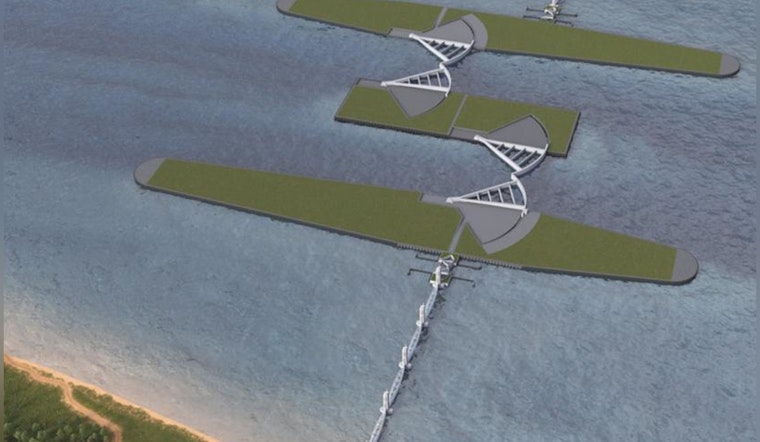
Jacobs has been tapped to design a massive storm-surge gate across the mouth of Galveston Bay that state officials say is meant to shield the Houston Ship Channel and nearby communities from hurricanes and rising seas. Branded “The Gate” in planning documents, the structure would stretch across the two-mile Bolivar Roads strait between Galveston Island and the Bolivar Peninsula and stay open to shipping until dangerous storms move in. For a region shaped by refineries, petrochemical plants, and global shipping, it ranks among the largest infrastructure gambles Texas has made in decades.
The company says the Bolivar Roads Gate System will be among the world’s largest coastal gate installations and, once built, is expected to protect more than six million people and roughly $800 billion in regional assets, according to Jacobs. The Dallas-based firm has called the assignment a “generational investment in Texas’ future” and says its design will combine advanced sector gates with digital modelling and operational planning to limit surge while keeping the Houston Ship Channel open for commerce.
The award is one part of the broader Coastal Texas Project, a federal-state program delivered by the Gulf Coast Protection District in partnership with the U.S. Army Corps of Engineers and the Texas General Land Office. The effort is already backed by nearly $1 billion in state appropriations, according to a release from the Texas General Land Office. Engineering firm HDR has been separately contracted to design the Bolivar and West Galveston beach and dune system that will flank the gate and bolster natural coastal defenses.
How the gate would work
The Gate would sit across Bolivar Roads and operate like sector gates that remain open for normal vessel traffic and close when a major storm approaches, Jacobs says. Early design work is being managed through phased task orders rather than a single lump-sum contract, an approach described by officials in recent industry coverage as a way to refine scope, schedule, and costs as studies progress, according to Construction Dive.
Why Houston is watching
Planners say the barrier is intended to lower future recovery costs, protect thousands of jobs tied to the Port of Houston’s refineries and terminals, and preserve sensitive wetlands and oyster reefs around Galveston Bay, as reported by Global Construction Review. For Houston residents and businesses, the looming question is how to balance protection of industry with the day-to-day impacts of a construction project on this scale as detailed designs and environmental reviews start to land.
Costs, timeline and a funding gap
The Coastal Texas Project has been congressionally authorized at roughly $35 billion in current dollars. Officials and the Army Corps have warned that inflation and long delivery schedules could push lifetime costs much higher, to figures cited in reporting as high as about $57 billion in some scenarios, according to The Texas Tribune. The state has set aside nearly $1 billion to advance initial design work, but major federal appropriations and local approvals will still be needed before full construction can get off the drawing board.
What comes next
Project partners say the next phase will roll out through a sequence of task orders that will produce environmental studies, operational plans and detailed engineering for the gate and the adjacent beaches and dunes. The Gulf Coast Protection District will manage the non-federal side of the program, and public engagement along with potential local funding votes will be crucial checkpoints on the timeline, the Gulf Coast Protection District says.
Design work now underway is expected to clarify where the gates will sit, what they will cost and when construction might begin. Local leaders and industry are already treating the design award as a milestone in what could be a decades-long push to harden the Texas coast. For anyone keeping score at home, the next key signals to watch are new task-order releases, federal funding updates and the publication of environmental reviews.




