

























































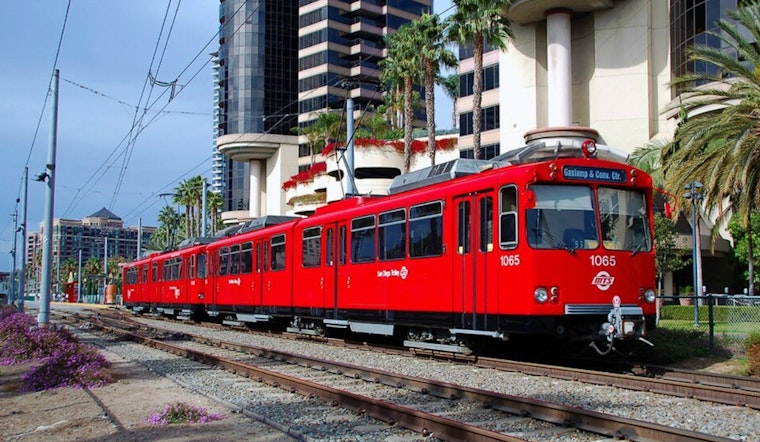
San Diego’s bright red trolleys are carrying fewer riders this winter, and the drop is big enough that transit officials are redoing the budget in real time. The Metropolitan Transit System is reworking its projections and warning of a multimillion dollar hit to fare revenue, while local leaders point to stepped up federal immigration enforcement and rising household costs as key reasons people are skipping trips.
MTS logged roughly 81.2 million passenger trips in the fiscal year that ended June 2025, about 95% of its pre pandemic peak, according to MTS. Trolley boardings did much of the heavy lifting in that rebound, a milestone first spotlighted when ridership sailed past over 80 million riders last year.
Officials Blame ICE Enforcement and Rising Costs
Agency staff told the MTS board that trolley boardings have slipped since July, soft enough that they revised this year’s ridership forecast. Budget officials now expect about 80.8 million trips for the current fiscal year, and they estimate the downturn could shave roughly 8.4 million dollars from fare revenue, according to The San Diego Union-Tribune.
Budget Projections Versus the Updated Outlook
That revised forecast is a sharp contrast to figures in MTS’ FY2026 proposed budget, which assumed about 86.2 million passenger trips and projected passenger fare revenue of 89.2 million dollars with an average fare of 1.04 dollars per trip. The budget document from MTS shows those assumptions were driven in part by stricter fare enforcement and an expected continuation of ridership growth.
What Agency Leaders Told Board Members
MTS CEO Sharon Cooney told The San Diego Union-Tribune that the slump appears limited to trolley lines, not the full network, and that rising household expenses seem to be cutting into discretionary rides. Officials also flagged recent federal immigration enforcement as a factor, even though MTS security staff reported they had not spotted Immigration and Customs Enforcement operations inside the system. Staff said they are working with county partners to post signage that explains riders’ rights, and City Councilmember Sean Elo-Rivera urged the agency to focus on steps that make passengers feel safe.
Why the Dip Matters for Fares and Service
The timing is rough. MTS is already wrestling with a structural funding gap that could lead to unpleasant choices, including raising fares, seeking new local revenue or trimming service. Reporting by KPBS has tracked how land use rules around stations, fare compliance efforts and shifting travel patterns have all complicated the agency’s recovery, even as total passenger numbers had been climbing.
What Riders Should Expect
Board members say they will keep a close eye on the numbers and roll out short term steps like clearer signage, targeted outreach and added safety measures while they debate bigger structural fixes. Staff are also studying potential fare changes and public engagement strategies to shore up revenue if ridership stays soft, according to Times of San Diego.
For riders, the near term reality is likely to be more visible enforcement and outreach on trolley platforms and trains. For MTS, the drop is a pointed reminder that transit budgets are highly sensitive to both safety perceptions and the squeeze on family finances. Officials say they will return to the board with updated data and recommendations if the trend holds.





