

























































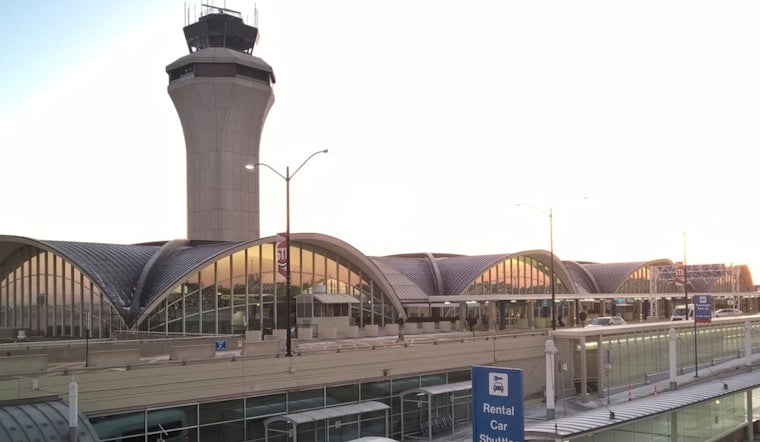
St. Louis Lambert International Airport is gearing up for its biggest makeover in generations, a wholesale rebuild that would scrap its two aging terminals in favor of a single, modern complex. The plan calls for more space for shops and restaurants, a simplified roadway system and a huge new parking garage that one local report estimates at roughly 7,000 spaces. Airport leaders say the transformation will roll out in phases over several years, not in one overnight switch.
The Consolidated Terminal Program, or CTP, anchors STL’s 2023 master plan and recommends moving all commercial passenger operations to the Terminal 1 footprint. The Federal Aviation Administration has already finished its environmental review and issued a Finding of No Significant Impact for the CTP, according to St. Louis Lambert International Airport.
Who Is Drawing Up Lambert’s New Look And When You’ll See It
Design work is now in full swing. St. Louis-based firm HOK has been tapped to lead the architectural team for the consolidated terminal and is spending the coming stretch developing detailed plans. Airport leadership told St. Louis Public Radio that the project will open in phases, with the first portions expected by late 2028 and full buildout targeted for the early 2030s.
The Multibillion-Dollar Price Tag And Airline Sign-Off
Public reporting places the CTP’s cost at roughly $3 billion, and airport officials have already cleared an important financial hurdle. Signatory airlines have agreed to a 3rd Amendment that authorizes about $650 million for design and enabling projects. That airline commitment, combined with the federal environmental clearance, removes two major obstacles. Final terminal construction, however, will still require explicit airline authorization and additional design milestones, according to the St. Louis Business Journal.
What Travelers Will Actually Notice
For passengers, this is less about planning documents and more about how the airport will feel. Expect wider concourses, more food and retail choices and a cleaner, less confusing pick-up and drop-off setup, all aimed at improving both convenience and airport revenue. A recent report from KSDK notes the plan would "create more room for shops and restaurants" and says the new garage could total about 7,000 spaces, though the final size and layout will depend on design work and airline agreements.
Behind-The-Scenes Work Already In Motion
Before anyone walks into a gleaming new terminal, the airport has to rebuild what most travelers never see. A new central utility plant, electrical system upgrades and airfield improvements are all intended to make a single terminal viable. Federal and other funding is helping pay for that groundwork. The design of the central utility plant recently secured more than $3.1 million in funding, according to KFVS, while local coverage of the West Airfield Program has highlighted a new airfield maintenance facility and related work, per MetroWire Media.
How The Next Phase Rolls Out
From here, officials plan to keep advancing design, issue requests for qualifications and hammer out final airline agreements before full terminal construction begins. HOK’s design phase and the airport’s program management work are meant to map out transitional gates, along with a new roadway and garage plan. Once key design milestones are hit, construction would move forward in phases over several years, according to St. Louis Public Radio.
Why This Matters For St. Louis
Regional business and civic leaders see a modern, better-connected airport as a critical piece of St. Louis’s economic future, one that could help attract companies, conventions and tourists while generating construction and long-term jobs. That view was front and center in a release from Greater St. Louis, Inc., even as officials emphasize that public hearings, continued environmental review and airline commitments will ultimately shape the final footprint and schedule.
What To Watch As The Overhaul Takes Off
In the next 12 to 18 months, keep an eye out for final design documents, updated cost estimates and RFQs from the airport, along with public meetings tied to the NEPA process and permitting. Travelers should also brace for phased construction impacts, including shifting parking locations, roadway changes and gate moves, as the Consolidated Terminal Program moves from planning into full-scale construction.



