

























































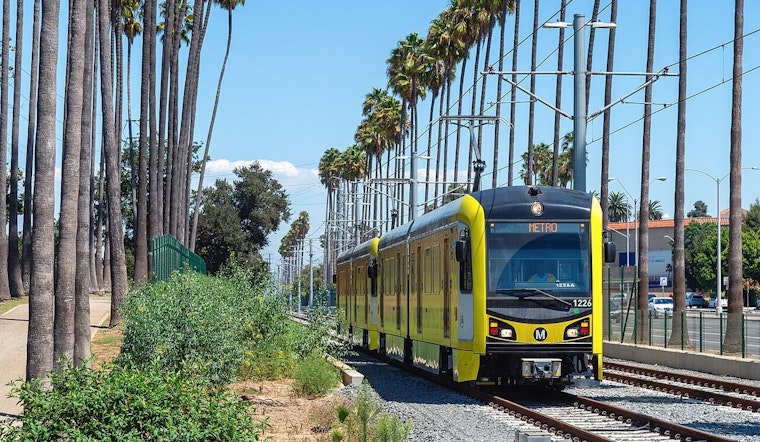
California Democrats are turning up the heat on the Trump administration, warning that Los Angeles could face an Olympic-sized transit meltdown if Washington does not cough up $2 billion in next year’s budget.
On Thursday, March 5, 2026, Rep. Sydney Kamlager-Dove led a letter to Transportation Secretary Sean Duffy urging the administration to include $2 billion in President Trump’s 2027 budget request. The money would bankroll buses, driver hiring and training, and temporary mobility hubs to move millions of visitors during the 2028 Los Angeles Olympic and Paralympic Games. The letter was co-signed by 35 California lawmakers, including Senators Adam Schiff and Alex Padilla.
As first reported by Spectrum News, the lawmakers personally delivered the letter to Duffy in Washington and pressed for quick action. Kamlager-Dove called the funding urgent, saying, “If they don’t get the money by the summer, we are in trouble,” and framed the request as a federal obligation to keep the Games accessible and moving.
Metro’s Numbers And The Funding Gap
Regional planning documents show Los Angeles County Metro has sketched out a Games Enhanced Transit Service, or GETS, that would temporarily lease or borrow roughly 2,700 buses at an estimated cost of about $2.0 billion, according to filings with the Southern California Association of Governments, or SCAG.
Metro has previously asked federal officials for about $3.2 billion for mobility-related projects tied to the Games, even as Congress has already approved roughly $94.3 million for planning and station improvements, according to LA Metro. The lawmakers’ new $2 billion ask is effectively aimed at closing the remaining gap for temporary bus service and related operations.
Lawmakers Say Timing Is Urgent
The California delegation is blunt about the calendar problem. They argue that national bus leasing cycles and long hiring and training timelines make this a now-or-never moment for Metro’s Olympic transit buildout.
Their letter urges the Department of Transportation to commit funding quickly so Metro can lock in contracts, secure enough vehicles, and ramp up driver training in time. Lawmakers quoted in the Spectrum News report argue that the federal government has to be a full partner with local agencies if Los Angeles is going to deliver a safe, efficient Games experience instead of gridlock.
What Riders Should Expect
If Washington signs off, the money would underwrite thousands of temporary shuttle trips, expanded bus-only lanes, and new mobility hubs that link rail lines with park-and-ride lots. Many Olympic venues are expected to have little or no spectator parking, which puts even more pressure on transit to carry the load. Metro already handles nearly 1 million weekday boardings, and officials say the Games plan depends on scaling up buses and staff to absorb massive visitor surges while still serving regular riders, according to local coverage from LAist.
So far, it is unclear how the Trump administration will respond. Federal budget decisions over the next year will determine whether Metro can fully build out its most ambitious version of GETS or settle for a slimmed-down approach. Regional planners say they are already modeling multiple funding and bus-sourcing scenarios, with contingency plans laid out in detailed regional filings, according to SCAG.





