

























































Five major Los Angeles art institutions - the Getty, LACMA, MOCA, the Hammer Museum, and Hauser & Wirth - are teaming up to cool it on energy use without leaving artworks out to dry. The group has jointly committed to adopting the Bizot Green Protocol, a set of conservation guidelines that relaxes traditional gallery climate controls to cut power demand while still protecting collections. Together, they plan to test wider temperature and humidity ranges, revise loan language where needed, and trade technical know-how across campuses. Museum leaders are pitching the shift as a coordinated attempt to shrink exhibitions’ carbon footprints without compromising long-term care of art.
What the Bizot Green Protocol Changes
First introduced by the Bizot Group in 2015, the Bizot Green Protocol recommends broader, more flexible in-gallery environmental ranges along with other operational practices aimed at reducing museums’ energy use. As detailed in the Getty Foundation’s PST ART Climate Impact Program report, the protocol encourages widening the narrow setpoints that once ruled the field (roughly 72°F ±2°F and 50% relative humidity ±5%) and instead relying on monitoring, lender agreements, and risk-based decisions to safeguard objects. Supporters say that for many contemporary and sturdily built works, this approach can significantly cut energy consumption at large exhibition sites while keeping risk within acceptable bounds.
Where Museums Have Tested It
MOCA has already tested expanded climate parameters at The Geffen Contemporary during the Olafur Eliasson: OPEN exhibition, pairing the shift with upgrades to a digital energy-management system that the museum estimates could trim the building’s energy use by about a quarter. Reporting from The Art Newspaper described MOCA’s retrofit and projected savings as an early local proof-of-concept.
Hammer Museum Steps Up
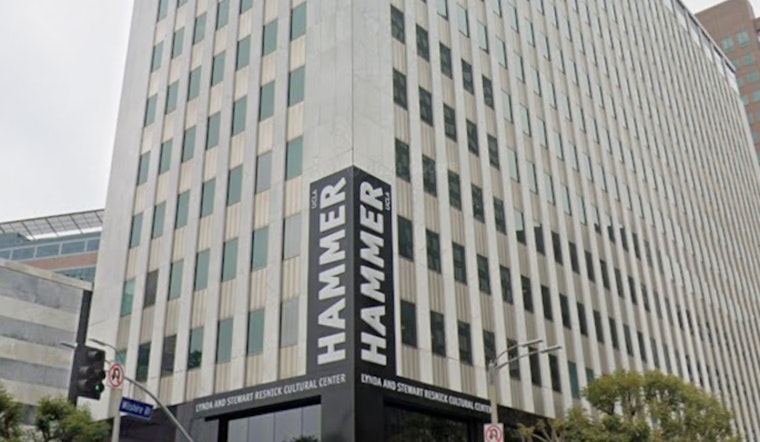
The Hammer used its PST ART exhibition Breath(e): Toward Climate and Social Justice as a test bed to fold Bizot guidelines into loan agreements and day-to-day gallery practice, then committed to carrying those standards forward for future shows and its own collection. According to materials from the Getty Foundation’s Climate Impact Program, Hammer staff inserted clauses asking lenders to sign off on expanded conditions and reported broad lender agreement during the pilot. Organizers pointed to that response as evidence that loans and climate goals can coexist when negotiations start early.
LACMA’s New Wing Was Built With Flexibility In Mind
LACMA’s new David Geffen Galleries were designed with flexible climate zones and energy performance as central concerns, targeting LEED Gold certification and using strategies such as low-carbon concrete, radiant heating and cooling, and natural ventilation to balance conservation needs with emissions reductions. Architectural coverage notes that the museum leaned on those design choices - informed in part by sector guidance like the Bizot Protocol - as it readied the new galleries to open.
Hauser & Wirth’s Operational Trials
Commercial gallery Hauser & Wirth has published climate-impact reports and put in place measures that include energy audits, LED lighting conversions, and an internal “Switch Off” campaign to cut site energy use. As reported by FAD Magazine, the gallery has also experimented at its Los Angeles space with overnight HVAC shutdowns, wider set-point ranges, and seasonal adjustments, logging measurable reductions in energy demand.
What Comes Next
Museum leaders say this will not be a one-and-done tweak. The partners plan to share Climate Impact Reports, technical findings, and sample loan language so that other institutions can gauge what might work for their own collections. The effort builds on the PST ART Climate Impact Program and related conservation research that many local organizations have been using since 2024, as reported in a report released in late 2025. Observers note that broader adoption will depend on lenders staying on board and on transparent, long-term data showing that objects are not suffering harm under the new conditions.
For Angelenos, the move signals that major cultural players are starting to plan exhibitions with energy and carbon budgets sitting right next to curatorial dreams. It also makes Los Angeles one of the more prominent regions testing conservation policy shifts at scale, turning gallery climate control into a very public climate conversation.





