

























































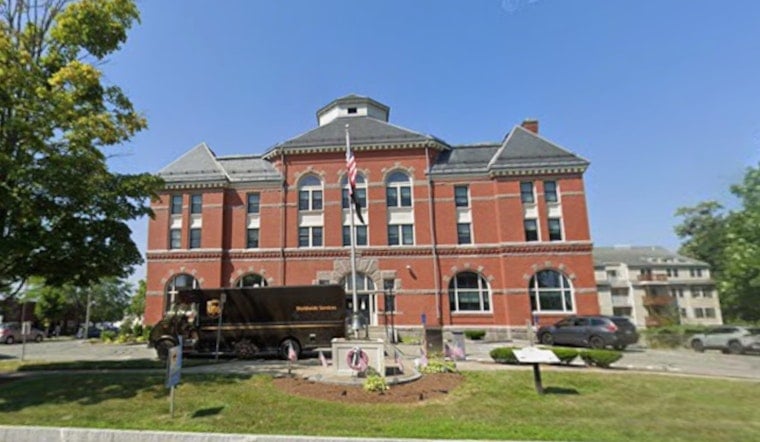
Stoughton town officials quietly dropped a packet and photos online Thursday announcing that the police department will start using Flock Safety license plate cameras, and the move immediately kicked up questions about privacy, oversight and how far the system will go. The town manager’s post says the cameras will power real-time “hotlist” alerts and allow retroactive searches to help recover stolen vehicles, locate missing people and investigate crimes. Town Manager Thomas J. Calter also asked the police chief and deputy chief to go back before the finance committee to answer follow-up questions, and the post listed Deputy Chief James O’Connor as the contact point for residents with concerns, as per Flock Safety.
The town manager attached a “Flock & Stoughton police data packet” that walks through how the vendor and department say the system will run: it detects license plates and vehicle attributes, supports hotlist alerts (including NCIC and NCMEC types) and, the packet says, requires human verification before any enforcement action is taken. The packet also spells out cloud storage, encryption and a default 30-day hard-delete policy for plate reads and vehicle images. Those specifics were included in the town manager’s Facebook post and mirror language in Flock Safety’s public documentation. According to Flock Safety, the company’s default retention period is 30 days.
What the Town Packet Says
The packet, signed by Calter, pitches the Flock rollout as a public safety tool meant “to capture objective evidence without compromising individual privacy” and lays out the local rules that are supposed to govern its use. It lists operating requirements the town says will be enforced: searches must be logged with an associated offense type, users have to be trained, any query must include a valid call or case number and every use of the system must create an audit trail. Calter’s letter also formally asks police leadership to brief the finance committee again to tackle concerns raised during the rollout, and it directs residents with questions to Deputy Chief O’Connor.
What Flock Says About Data, Access and Limits
In its public materials, Flock says its automated license plate reader cameras capture plates and vehicle characteristics, not faces, and that its platform is built with access controls and auditing tools. The company’s policies say data are uploaded to cloud storage (Flock documents reference AWS hosting), encrypted both at rest and in transit, and purged on a rolling 30-day schedule by default. Customers can require longer retention only through formal approvals. Flock also promotes permission-based sharing and auditing tools that are supposed to let local agencies control which outside organizations can request or receive data, according to Flock Safety and the vendor’s legal policies.
National Context and Accuracy Worries
Stoughton’s packet lands at a moment when Flock deployments are under renewed national scrutiny after reporting on cases where plate reader misreads led to mistaken stops and other harms. Investigations and coverage have documented headline-grabbing successes alongside troubling misreads, and some vendors and partners have scaled back integrations in response to public pushback. Recent national reporting by outlets including Business Insider and TechCrunch has zeroed in on the tradeoffs between investigatory value and the risk of false hits.
Local Oversight and What Comes Next
Calter’s post asks the police chief and deputy chief to return to the finance committee to address questions about cost, guardrails and how the town is notifying the community, and it encourages residents to send technical questions directly to Deputy Chief O’Connor. Stoughton’s municipal pages list the police department at 26 Rose Street and provide town contacts for public records and departmental questions, which officials say will be the route for formal inquiries. According to the town manager’s Facebook posting and the municipality’s directory, those town offices are the proper channels for records requests and follow-up. Residents can find police staff contact details through the directory at Town of Stoughton.
Legal and Oversight Questions
Beyond Stoughton’s own policy, Flock deployments raise broader legal and procedural questions about who can tap into camera networks and what process is required when federal agencies seek records. Flock’s evidence policy says it will follow legal process and will work to notify customers of evidence requests when it is allowed to do so. Courts and auditors have weighed in on how such data can be used in investigations, and experts say strong local rules and regular audits are critical, since errors can have real-world consequences. The upcoming finance committee session is expected to be the next venue for officials to spell out the town’s oversight structure, record-keeping plan and the specific terms of any contract or agreement.
For now, the town packet and Flock’s public policies remain the key documents describing how the system is supposed to operate. Residents with questions are directed in the post to contact Deputy Chief James O’Connor at [email protected]. According to Calter, police officials have committed to briefing finance committee members again in the coming weeks to walk through policies and respond to public concerns.





