

























































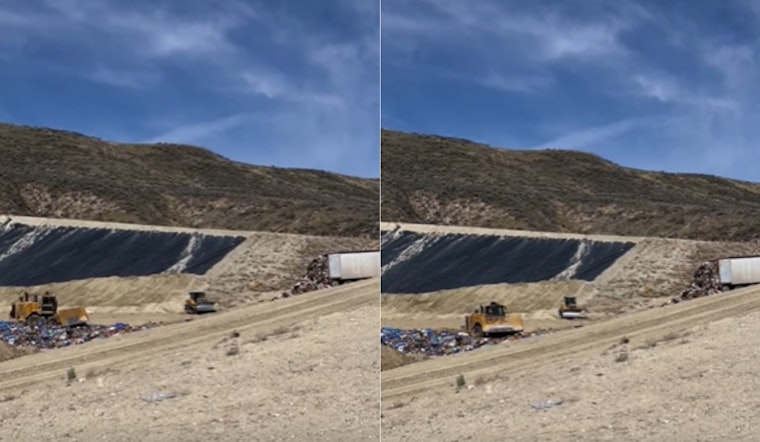
Logan City officials had a blunt warning for residents on Wednesday, March 25: lithium-ion batteries do not belong in curbside trash or recycling, at all, ever. The city said those batteries must be taken to designated drop-off points, warning that when they wind up in regular waste, they can ignite inside collection trucks, at transfer stations, and at the landfill, putting workers and equipment at risk.
What Logan's post advised
In a Facebook reel, the City of Logan urged residents to skip the curbside bins and instead haul lithium-ion batteries to the Logan Landfill's Household Hazardous Waste (HHW) facility, according to the City of Logan Government. The post links to the city's March newsletter and reminds residents that HHW drop-off is free, and the Logan Landfill brochure also lists household hazardous waste disposal as a free service, according to Logan City.
To prep batteries for drop-off, the city advised putting each one in its own clear plastic bag and covering any exposed terminals with clear packing tape or non-conductive electrical tape. If a battery is swelling or leaking, officials told residents to call ahead for instructions instead of trying to handle it on their own.
Why batteries spark fires in the waste stream
Lithium-ion batteries can short out or get crushed by heavy equipment, triggering a thermal runaway that releases extreme heat and can ignite whatever is nearby. A 2021 analysis of battery fires in waste management found reports of hundreds of waste-facility fires tied to batteries between 2013 and 2020, according to the U.S. EPA.
Local waste programs report similar trouble: Larimer County, Colorado, logs battery-related incidents roughly three to five times per month at its facilities, highlighting the practical risks to trucks, transfer stations and landfills, according to Larimer County Solid Waste.
How to prepare damaged batteries and where to drop them off
Recycling groups say the basics are simple but important: isolate and protect each battery before you move it. Bag every cell separately and cover exposed terminals with clear packing or non-conductive electrical tape to prevent sparks, according to Call2Recycle.
If a battery is swollen, punctured, or leaking, state fire officials advise more caution. The guidance: place it in a container filled with sand or kitty litter and contact hazardous-waste staff for specific handling instructions rather than trying to fix the problem yourself, per the Oregon State Fire Marshal. Damaged, defective, or recalled batteries may require special packaging, and HHW programs can walk residents through safe transport and disposal.
Where to take batteries in Logan
Logan's Household Hazardous Waste drop-off is on the Environmental Center campus at 153 N 1400 W. The Logan Landfill brochure notes that HHW disposal is a free service for residents and lists current hours and material limits, according to Logan City.
For those who prefer a store run, some retailers participate in collection networks for rechargeable batteries; Home Depot, for example, notes in-store drop-off options tied to regional recycling programs. Residents with questions or large quantities are encouraged to call the landfill first to confirm what is accepted, any limits and how to pack materials before hauling them in.
City staff and waste operators say small habits like taping terminals, bagging loose cells and using HHW or certified drop-off points can head off expensive, dangerous fires and help keep collection services running smoothly. For the city's full guidance, residents can check the City of Logan's Facebook post and the landfill brochure or call the Logan Landfill during business hours.





