

























































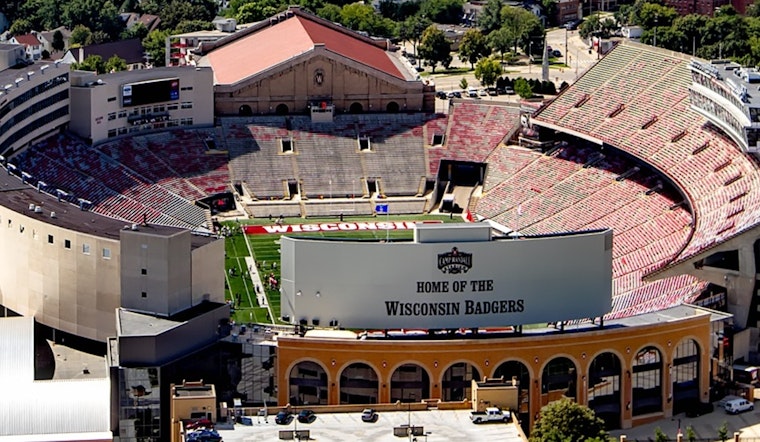
A bill racing through the Wisconsin Legislature could tap taxpayer dollars for university sports just as a national settlement opens the door for schools to pay college athletes directly. Supporters say the money is about saving Olympic and women’s programs. Critics see something closer to a public subsidy for roster-building in an era of seven-figure NIL deals. The fight has quickly turned into a loud argument over transparency, budget priorities and how far state government should go to cushion the new market for athlete pay.
What the Bill Would Do
Assembly Bill 1034 would send $14.6 million a year in general purpose revenue to the University of Wisconsin–Madison to cover debt service and maintenance on intercollegiate athletic facilities, plus $200,000 annually each for the UW–Milwaukee Klotsche Center and the UW–Green Bay soccer complex, according to the bill text. The proposal also creates a statutory framework for UW name, image and likeness (NIL) rights and adds confidentiality provisions for certain NIL contracts and revenue-allocation records, changes supporters say schools need as they adapt to new revenue-sharing rules. According to Legiscan, the bill writes both the new appropriations and the NIL provisions into state law.
Why Backers Say It Is Needed
Backers, including Rep. Alex Dallman and UW athletic officials, argue the state cash will “free up” program revenue so the athletic department can absorb revenue-sharing costs without cutting nonrevenue teams, UW athletic director Chris McIntosh told lawmakers. McIntosh warned of “terribly difficult decisions” if the funding does not come through and said the dollars would help UW remain competitive as peer programs pour money into recruiting. That testimony, summarized by the Wisconsin Newspaper Association, framed the bill as a way to protect sports that do not pay their own way. According to WNA, legislators echoed those concerns during committee hearings.
National Context: Revenue Sharing Arrives
The timing is no coincidence. A court-approved settlement now lets Division I schools opt into a revenue-sharing model that authorizes direct payments to athletes, with initial per-school caps in the roughly $20 million to $21 million range in the first year, according to legal analysis. That judicially sanctioned framework, and the implementation rules that follow, have universities and state governments scrambling to cover what look a lot like payroll expenses. As reported by AP and explained by legal counsel at Ropes & Gray, that new regime is the immediate driver of the budget urgency.
Money Already Moving, and Quickly
The market has been sprinting ahead of the rulebook for a while. CBS Sports has flagged an informal “$10 million club” of men’s basketball programs spending at least that amount on their rosters. Valuation trackers from Sports Illustrated put some top athletes’ estimated NIL values in the multimillion-dollar range, with Arch Manning around $6.8 million and AJ Dybantsa roughly $4.1 million. Those kinds of numbers help explain why university leaders insist they need new financial tools to keep up in recruiting and the transfer portal. Recent reporting and valuations appear at CBS Sports and Sports Illustrated.
Transparency Fights and Budget Tradeoffs
UW officials told lawmakers they paused repayment on a $20 million central-campus loan and still paid nearly $9.9 million in facilities debt service in 2024–25 while adjusting to the revenue-sharing era, a move the university described as temporary breathing room for athletics, according to local reporting. At the same time, the bill would carve certain NIL and revenue records out of Wisconsin’s public-records law. Critics argue that exemption would make it harder for journalists and watchdogs to see who is getting paid and how money is distributed. The records questions, along with the loan and debt-service details, are outlined in coverage by WNA and in the statutory language posted by Legiscan.
Other States Are Jumping In
Wisconsin is hardly alone in tinkering with the rules. Florida’s Board of Governors has approved emergency rules that could let its universities free up about $22.5 million a year to compensate athletes. Arkansas passed a law last year that exempts institution-paid NIL income from the state’s 3.9 percent income tax. In California, universities covered by the same settlement have already begun planning for direct payments to athletes, creating a patchwork of approaches across the country. For context, see coverage by AP, an overview from NCSL and California reporting by CalMatters.
Legal and Political Stakes
Lawyers and policy analysts caution that the settlement, combined with a patchwork of state laws, leaves big legal questions on the table involving Title IX, antitrust and transparency. Those unresolved issues could trigger more litigation or force Congress and federal regulators to step in, and many schools that opt into revenue sharing will still feel serious budget pressure. Legal commentary and implementation guides note that the settlement does not eliminate every risk and that courts and regulators may yet reshape the landscape. A detailed analysis appears from Loeb & Loeb.
Whatever lawmakers ultimately decide, Wisconsin has placed itself in the middle of a national test. Will state policy and taxpayer dollars soften the shock of a new pay era for college athletes, or end up channeling public money into an already overheated recruiting arms race? Initial coverage of the proposal appeared in Urban Milwaukee, and legislators in Madison are expected to keep sparring over the details in the weeks ahead.




.jpg)