

























































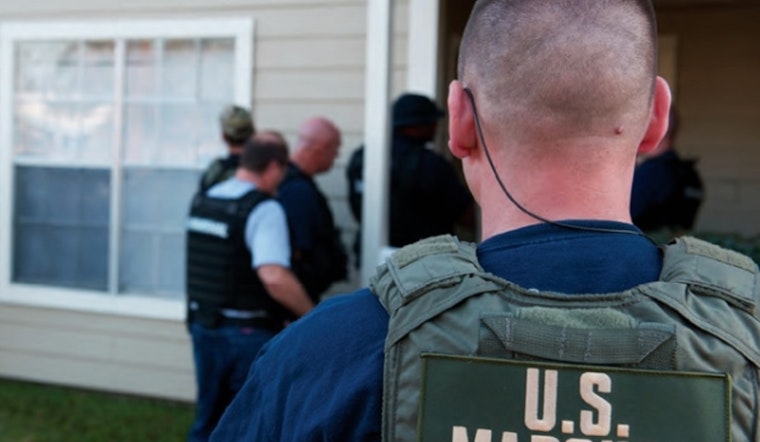
A Metro Atlanta rapper says federal agents jolted him awake before sunrise on Tuesday, storming into his McDonough home, forcing him outside at gunpoint and leaving the place torn up. He says the U.S. Marshals were hunting a Houston murder suspect, found no one inside and now he is gearing up for a legal fight.
Jeffrey Thurston told reporters that U.S. Marshals entered his house before dawn looking for a woman identified by officials as Alexis Miller, who the agency says is wanted on a murder warrant out of Houston. He said several agents ordered him out of the home at gunpoint, then searched the property and caused damage while ultimately finding no one inside. A U.S. Marshals spokesperson told the local station that the agency believed it had legal authority to search the address, according to 11Alive.
How fugitive task forces operate
The U.S. Marshals Service runs regional fugitive task forces that track down and arrest people wanted on state or federal warrants, often working side by side with local law enforcement across jurisdictions. As outlined by the U.S. Marshals Service, those teams routinely serve warrants and make arrests across district lines as part of their day-to-day operations.
Bigg Jigg's account and background
Thurston records and performs as Bigg Jigg, and says the early-morning entry was especially traumatic because he is disabled and uses a prosthetic leg. He told the station the search left his home in disarray and said he plans to seek legal remedies.
Legal options
Thurston has said he will explore legal action. Civil claims over allegedly unlawful searches and seizures are commonly filed under 42 U.S.C. § 1983, which allows people to sue state actors for violations of constitutional rights. Whether a lawsuit would succeed typically depends on the warrant paperwork and the specific facts of how the search was carried out.
What’s next
It remains unclear whether the Marshals or local authorities will release the warrant or other paperwork explaining why Thurston’s address was targeted. The agency regularly posts news releases about captures but does not routinely publish sensitive operational documents, per the U.S. Marshals Service. Thurston’s vow to seek damages could set up a civil dispute over the search’s legality as officials and attorneys work through the details of what happened that morning.




