

























































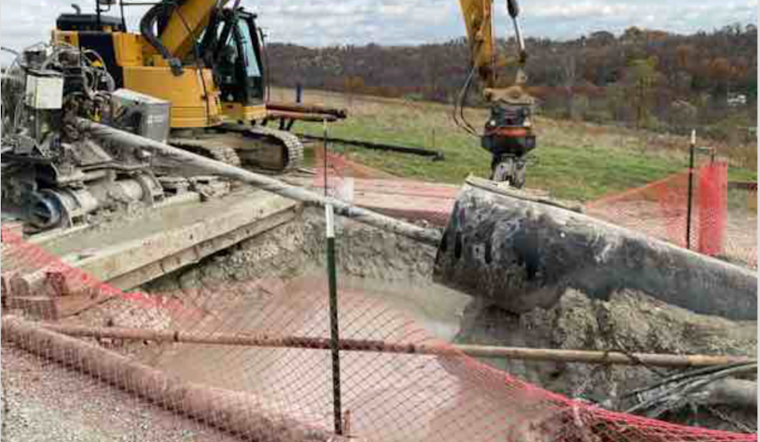
More than a million gallons of drilling fluid have disappeared into an abandoned coal mine under rural Washington County, and neighbors say they found out only after state inspection records went public.
Contractors for MarkWest Liberty Midstream reported a series of losses while using horizontal directional drilling for the Chiarelli to Imperial pipeline in Mount Pleasant Township, according to state records. The project sits in a part of Washington County where many residents still rely on private wells, which is why the Pennsylvania Department of Environmental Protection has now opened a formal investigation.
Inspection reports compiled by PA Environment Digest show MarkWest reported about 1.24 million gallons of drilling fluid lost across roughly 18 incidents between Oct. 27 and Jan. 13. DEP staff inspected the drill path, collected water and drilling-fluid samples, and noted that crews had vacuum trucks on site to recover any material that surfaced. The department has flagged the project and says violations could be on the way once its review is complete.
The drilling fluid reportedly flowed into a mine void at the long-abandoned Primrose Mine beneath Mount Pleasant Township, according to The Allegheny Front. Contractors lost control of drilling fluid on at least 19 occasions while carrying out the horizontal drilling work. DEP records show the agency has already issued a notice of violation for failing to report some earlier losses, and inspectors are documenting the events with photos and detailed field notes.
In email correspondence with regulators, MarkWest told DEP the drilling mixture is nontoxic and “approved by the DEP,” and said the company's monitoring has not found evidence of surface-water contamination, as reported by The Allegheny Front. The company has described continuing the bore as the “practical solution” while crews try to complete the crossings and recover as much material as possible.
Local environmental groups are not exactly reassured. The Breathe Project, Three Rivers Waterkeeper, and the Clean Air Council began alerting residents of Mount Pleasant and neighboring Robinson Township once the loss totals were posted, urging DEP to require testing and pause drilling until the full scope of the problem is clear, according to PA Environment Digest. Group leaders say homeowners who depend on private wells deserve quick and transparent answers about whether their water supplies may have been exposed.
What Drilling Fluid Is And Why It Matters To DEP
Drilling fluid, often called drilling mud, is typically a slurry of fresh water mixed with bentonite clay and small amounts of pH-adjusting additives such as soda ash, according to industry guidance from Trenchlesspedia. It is not crude oil or gasoline, but that does not mean regulators shrug when it escapes into the environment.
Under Pennsylvania law, drilling mud that is lost or discharged into the environment can be treated as industrial waste. That classification has been central in enforcement actions on other pipeline projects in the state, StateImpact Pennsylvania has reported.
Legal And Enforcement Outlook
DEP has already issued a notice of violation tied to unreported fluid losses on this project and has warned that more enforcement could follow once investigators finish their work. If the agency finds water-quality impacts or additional violations of reporting rules, operators can face civil penalties and, in some cases, criminal charges.
That is not an empty threat in this region. A recent example involved misdemeanor charges connected to underreporting spills on the Falcon Pipeline project, a move that showed state authorities are willing to escalate when permit conditions and notification requirements are ignored, according to E&E News.
For now, DEP says its investigation remains open. Inspectors have collected samples and walked the drill route, while MarkWest maintains that its surface-water monitoring has not detected contamination. Residents who use private wells, or who notice sudden changes in the taste, smell, or appearance of their water, can contact the Pennsylvania DEP hotline at 1-866-255-5158 and may want to consider independent well testing. We will keep tracking DEP inspection records and local reporting as the agency continues its review.





