

























































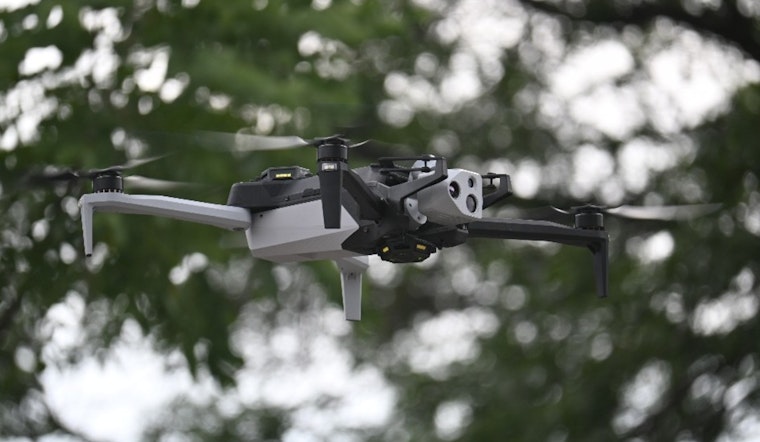
Six months after Minnetonka quietly sent its first drone up over the city, the unmanned fleet is already reshaping how some 911 calls play out on the ground. City officials say the Drones as First Responder program has turned small aircraft into a kind of airborne scout, feeding real-time video back to police before squad cars even reach the block.
In that short stretch, the department dispatched drones to 423 calls, resolved roughly 20% of those incidents without sending an officer and had the drone arrive first about 65% of the time, according to KSTP. Deputy Chief Jason Tait told reporters the department deletes captured drone video within three days, which is stricter than Minnesota’s seven day statutory cap, and crime analyst Garith Scherck said some flights are reaching scenes “within 30 seconds to 45 seconds.” Officials pitch the system as a public safety tool that gives responders more information, faster, and they argue that it keeps both residents and officers safer.
How The Drones Arrive First
The program’s speed comes from a network of rooftop docks scattered across Minnetonka. When a 911 call fits the program criteria, a drone can be launched automatically, then piloted remotely while it streams live video into an operations center. Supervisors and pilots watch that feed, size up any risk and help decide what kind of response, if any, should head to the scene.
City leaders signed off on the policy after a round of public comment and then held a formal launch event in August 2025, according to the city’s project materials and earlier local coverage. Those program documents include the adopted policy and a press release that lays out how and when the drones can be flown.
Statewide Growth And Oversight
Minnetonka is not the only place leaning into unmanned aircraft. Across Minnesota, law enforcement agencies reported 6,603 uses of UAVs in 2024 in situations where a warrant was not required, and statewide costs and deployments have climbed sharply, according to the Bureau of Criminal Apprehension.
The Minnesota Department of Public Safety requires agencies that fly drones to report those deployments to the BCA, which then compiles and publishes the numbers every year. The agency says those annual tallies are meant to give lawmakers and the public a clearer window into how often the technology is used and for what kinds of incidents.
Privacy And The Law
From the moment the Minnetonka program was floated, privacy questions have chased it. Minnesota statute section 626.19 tells law enforcement agencies to delete UAV data “as soon as possible” and no later than seven days after it is collected, unless the footage becomes part of an active criminal investigation.
Minnetonka officials say they are going further by scrubbing routine footage within three days. They also say every drone flight will be logged to a public dashboard, which is supposed to give residents and watchdogs a way to audit how the drones are being used.
Cost And The City's Pitch
Running the DFR system costs about $265,000 per year, according to city officials, who argue that the expense will be offset by cutting down on unnecessary in person responses and boosting safety. Earlier coverage put the initial projection closer to $300,000 a year, and leaders told the city council they expect long term savings over the life of the vendor contract.
Officials say they plan to keep publishing deployment data and taking public feedback as the program matures, while the BCA’s annual reporting provides a statewide check on usage and costs. Minnesota’s first drone-as-first-responder launch was covered last summer; this latest snapshot shows the technology moving out of its rollout phase and into a regular, if still closely watched, role in Minnetonka’s emergency response toolkit.



