

























































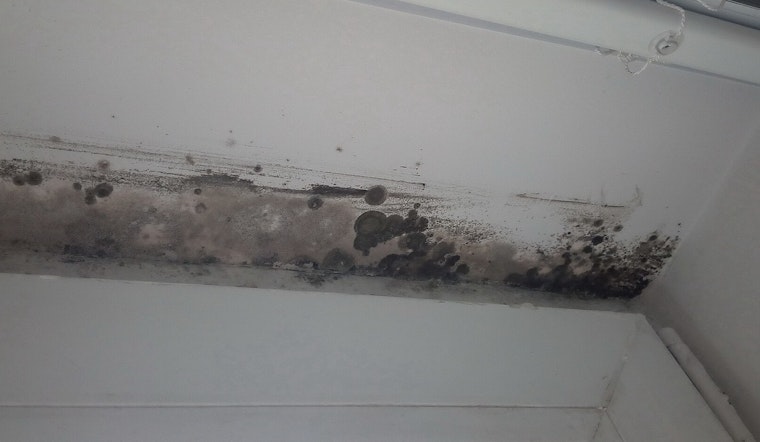
Sherrell Lawson says her Bushwick NYCHA apartment has turned into a health hazard, not a home. She describes “powdery patches of black mold” crawling across her kitchen cabinets, bubbles swelling in the ceiling, and chunks of flooring near the bathroom and kitchen torn up and left exposed. Despite filing repeated maintenance requests, Lawson says many were marked closed without the work actually being done, leaving parts of her unit essentially unusable.
Lawson told News 12 Brooklyn that the conditions have taken a serious toll. She says she developed shortness of breath, headaches and dizziness, eventually leaving her unable to work and making the apartment feel like anything but a safe place to live. “My house is not a home anymore,” she said, adding that exposed materials from the torn-up flooring have her worried about possible asbestos.
According to the station, NYCHA sent crews who removed damaged cabinets and began a full cleanup only after News 12 Brooklyn reached out for comment. Lawson says she is glad to see work finally happening, but maintains these are repairs that should have been handled long before a TV camera showed up.
NYCHA Response and Where Tenants Can Turn
Guidance from NYCHA tells residents who report mold or leaks through the Customer Contact Center to escalate unresolved cases to the independent, court-appointed Ombudsperson Call Center. NYCHA’s Stop Leaks FAQ outlines expected repair timelines, when specialized trades are required and what steps to take if work stalls or is not completed.
The Ombudsperson Call Center, created under the Baez v. NYCHA consent decree, can accept complaints, request updates from NYCHA and arrange virtual inspections on behalf of tenants, according to its website. The OCC can be reached at 1-888-341-7152 or online at ombnyc.com. NYCHA asks residents to first report new or ongoing leaks or mold conditions through its Customer Contact Center or the MyNYCHA portal before seeking help from the Ombudsperson.
Health Fears Over Living With Mold
Lawson told News 12 Brooklyn she spent weeks visiting doctors after developing shortness of breath, headaches and dizziness that she links to the conditions inside her apartment.
Federal health guidance backs up concerns about living in damp or moldy spaces. The Centers for Disease Control and Prevention note that exposure to mold and moisture indoors is associated with a range of respiratory symptoms and other health problems, including shortness of breath and headaches. Health officials recommend that residents who believe mold is affecting them document visible conditions and medical visits, and bring those details to a clinician when discussing symptoms.
Why Fixing NYCHA Apartments Takes So Long
Tenant advocates and local officials say Lawson’s ordeal feels painfully familiar across NYCHA properties in Bushwick and across the city, where chronic leaks, damaged interiors and long-delayed repairs have become part of daily life for many residents.
As City Limits reported, NYCHA has estimated roughly $78.3 billion in capital needs over the next 20 years. To chip away at that staggering backlog, agency leaders have been pushing a mix of funding and financing models, even as tenants continue to wait for basics like safe, dry walls and intact flooring.
In Lawson’s apartment, crews have now removed the sink and cabinets and begun a cleanup. For her, the work is welcome but overdue. For other NYCHA residents watching her story, officials and health experts say the first step is still the same: report the problem, document what you see and feel, and keep pushing, whether through NYCHA’s Customer Contact Center, the MyNYCHA portal or, if needed, the Ombudsperson Call Center.





