

























































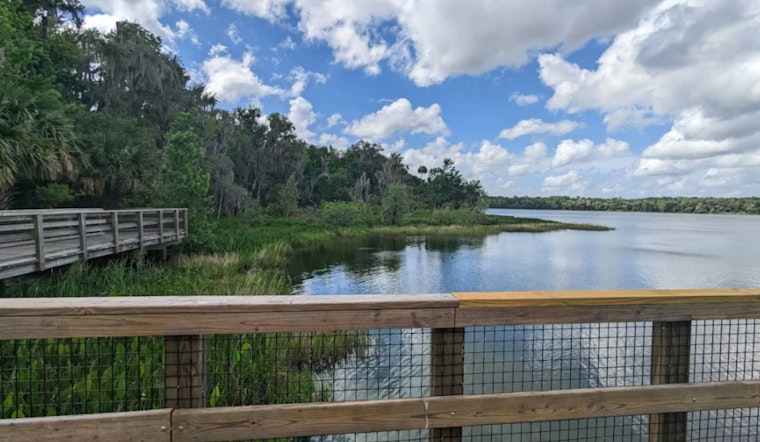
A long-distance trail that would let you bike, stroll or roll from the Tampa Bay area down to Naples is slowly coming into focus. Planners and conservation groups are pitching the Florida Gulf Coast Trail as a single, continuous greenway of about 420 miles, stitched from existing paths and new connectors. The idea is to turn neighborhood bike lanes, rail-trails and waterfront promenades into one cross-region corridor that runs through coastal towns and suburbs, while boosting safety, access to nature and local economies along the way.
According to Trust for Public Land, the Florida Gulf Coast Trail is planned as a roughly 420-mile multi-use route that would link seven coastal counties and dozens of communities. The group’s materials outline possible connections through Hillsborough, Pinellas, Manatee, Sarasota, Charlotte, Lee and Collier counties, as partners work to knit together existing segments and plug critical gaps. The project is expected to sit alongside Florida’s established Coast-to-Coast network, which the state Office of Greenways and Trails says runs about 250 miles and is roughly 88 percent complete.
Where the Route Would Run
Planners want the Gulf Coast route to line up with high-use favorites like the Fred Marquis Pinellas Trail and Sarasota’s Legacy Trail, while closing the awkward gaps that currently force riders onto busy roads. As reported by Creative Loafing Tampa, local officials are eyeing a 75-mile Pinellas loop and a 26-mile loop that would connect the Courtney Campbell Causeway with the Howard Frankland Bridge. “Most people don’t really know much about the Florida Gulf Coast Trail,” program director Charles Hines told Creative Loafing Tampa, adding that closing just a few short gaps could create bay-crossing routes that are catnip for visitors.
Progress on the Ground
There are already some concrete moves toward the big vision. Trust for Public Land and local partners have announced a revised agreement with Seminole Gulf Railway to advance an 11.4-mile Bonita–Estero rail corridor acquisition, which advocates say would fill a key gap between Lee and Collier counties. In Sarasota County, a Beneva Road connector project has broken ground to link the Legacy Trail to Nathan Benderson Park, a relatively small but strategically located segment that planners say strengthens regional continuity, per the Sarasota Chamber. Supporters argue that wins like these make the case stronger when they go hunting for state and federal grants.
Why It Matters
Backers lean on both safety and economic arguments. Southwest Florida includes several notoriously deadly corridors for people walking and biking, and advocates say continuous, separated trails would give residents safer, lower-stress routes for everyday trips, not just weekend recreation. Reporting on the regional plan has noted that the project is intended to serve millions of residents and improve access for low-income households, tying in equity and public health goals that go beyond scenic views.
The state’s Office of Greenways and Trails frames long-distance routes as public-health and economic assets, pointing out that connected trail systems draw tourists, support small businesses and expand outdoor access. Planners say the Gulf Coast Trail could help protect open space and shorelines while knitting dozens of communities into a larger recreation and transportation network.
The catch is timing and money. Creating a continuous route will require dozens of land deals, rights-of-way and tight coordination among local governments, MPOs and FDOT, with projects moving ahead piece by piece. Even so, local leaders sound bullish. As Creative Loafing Tampa quotes Charles Hines, “the momentum is growing,” and advocates say every new connector makes the notion of a full Gulf Coast Trail feel a little less like fantasy and a little more like a future weekend plan.



