

























































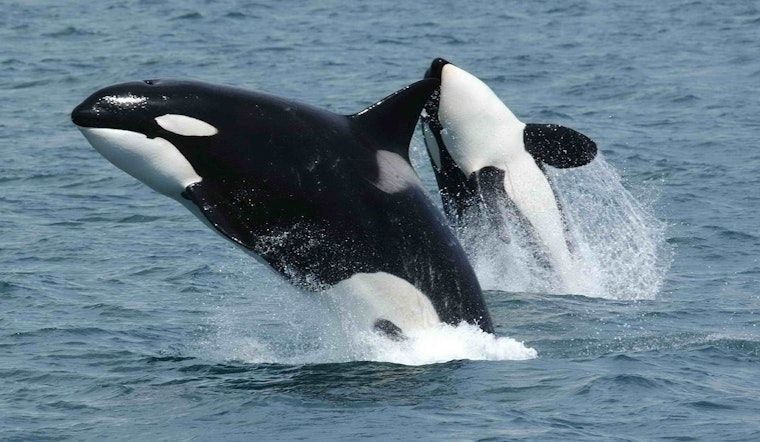
Early Thursday, Elliott Bay got a surprise rush-hour cameo when a group of orcas cruised in close to shore off Jack Block Park, sending word-of-mouth alerts rippling through West Seattle. Waterfront paths quickly turned into impromptu viewing spots as people lined railings, raised binoculars and phones, and tried to keep up with the black dorsal fins cutting through the bay.
Kersti Muul, who runs a local Salish-area whale-alert network, told West Seattle Blog the whales were "off Jack Block Park" at about 8:10 a.m. and confirmed that "these are the mysterious 'cookie cutter orcas' again." Her note went out as one more tip in the loose but very active chain of shore-based spotters who have been tracking whales across the Salish Sea all month.
Photos from Thursday's pass clearly show the telltale circular scars that match cookie-cutter shark bites. Reporting by KUOW links those markings to a small trio of orcas first documented in Vancouver Harbour earlier in March and later photographed as far north as Anchorage, Alaska. The round scars are typically associated with deep-water, warmer-water sharks, suggesting these whales have spent time offshore. Because they do not match any cataloged individuals in existing regional ID lists, they have quickly become a favorite target for both professional researchers and volunteer photographers.
Why researchers are paying attention
Bigg's (transient) killer whales, the mammal-eating ecotype most often seen in Elliott Bay, are usually well documented as they range widely through the region. The Encyclopedia of Puget Sound notes that transients use the entire Salish Sea, and that changes in their movements can hint at shifts in prey or broader ocean conditions. That context is part of why scientists are now asking the public for clear photos and sighting times so these visitors can be checked against existing catalogs or added as new entries to regional records.
How to watch and report
State officials are reminding boaters and shoreline watchers to enjoy the show without crowding the stars. That means giving whales plenty of room, avoiding parking vessels in their path, and reporting sightings so large ships and enforcement teams can respond if needed. The Washington Department of Fish and Wildlife urges the public to log encounters through the WhaleReport app and to follow Be Whale Wise approach-distance rules for both transient and resident orcas, including minimum separation distances. Clear photos with accurate time and location details are the most helpful contributions for researchers and safety officials, according to WDFW.
An early-March account of orcas pushing deep into Elliott Bay near the Port's container wharves highlighted just how frequently shore-side sightings have popped up this month. Local groups such as Orca Network collect and review photos and reports; anyone who saw Thursday's whales is encouraged to upload images to Orca Network's Whale Sighting Network or submit them through WhaleReport so experts can keep piecing together individual IDs and travel routes.
After Thursday morning's swing through Elliott Bay, the whales headed back out, and trackers are now watching for the next set of dorsal fins to break the surface. For anyone planning to head down to the waterfront: keep your distance, grab the best photos your lens will allow, and log what you see so scientists can continue mapping where these well-traveled orcas have been.




