

























































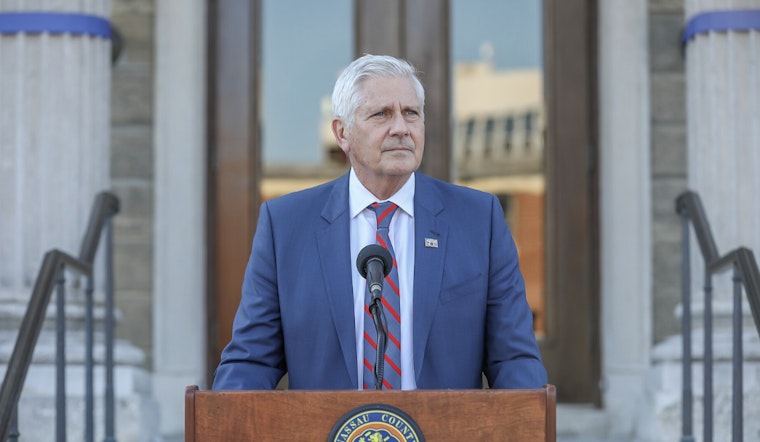
Democratic lawmakers in Nassau County are taking Bruce Blakeman's civilian "special deputies" program to court, attacking the qualifications of his handpicked recruits and arguing that taxpayer money should not be paying for it. Their lawsuit asks a state judge to shut the squad down entirely and block any public funding that supports it.
What the filing alleges
According to The New York Times, the new filing leans heavily on résumés and public records to draw a blunt contrast between the volunteers and career officers. The complaint says some recruits appear to have arrest records or outstanding warrants, five are in their 70s, and one is a doctor who served on Blakeman's transition team and is listed as the county police department surgeon. The lawmakers are asking the court to declare the special deputy squad illegal and to bar any public spending on the program.
How the unit would work
Blakeman created the Provisional Emergency Special Deputy Sheriffs program last year, envisioning up to 75 members who would earn $150 a day when activated and would be required to hold a valid pistol license. As reported by AP, the volunteers were slated to receive about 12 hours of classroom and range training, and roughly two dozen had already been sworn in. The plaintiffs point out that Nassau already has one of the country's largest local police forces, with about 2,600 sworn officers, and can call up hundreds of unarmed auxiliary volunteers in an emergency.
Blakeman's defense
Blakeman's office has fired back, arguing that critics are overstating the risks and understating the safeguards. Officials say every special deputy has undergone background checks, received training in criminal law and firearms, and holds a New York carry permit. As Gothamist reports, Blakeman described the roster as "a database" and said the volunteers are meant to provide "another layer of protection" for hospitals, utilities and places of worship, rather than patrol neighborhoods. His team has branded the lawsuit frivolous and defends the initiative as a surge option for major emergencies.
Legal implications
The case zeroes in on a core legal question in New York: who is allowed to wield police powers, and under what authority. The plaintiffs are two Democratic county legislators who have asked a state Supreme Court judge to disband the unit and halt county spending on it. The New York Times reports that in October 2025 a judge denied the defendants' motion to dismiss and rejected a counterclaim, keeping the case alive and forcing more discovery and briefing from both sides.
What comes next
For now, the special deputies have not been deployed in the field, and their practical role is on hold while the court fight plays out and local debate rages over whether the county needs an armed civilian backup squad at all. CBS New York and other outlets note that supporters say the volunteers would supplement first responders in rare disasters, while critics warn that lightly trained, armed civilians could create confusion and danger during high stakes incidents. Ultimately, the judge's rulings will decide not only whether Nassau can keep recruiting these deputies, but also whether taxpayers will be footing the bill.



