

























































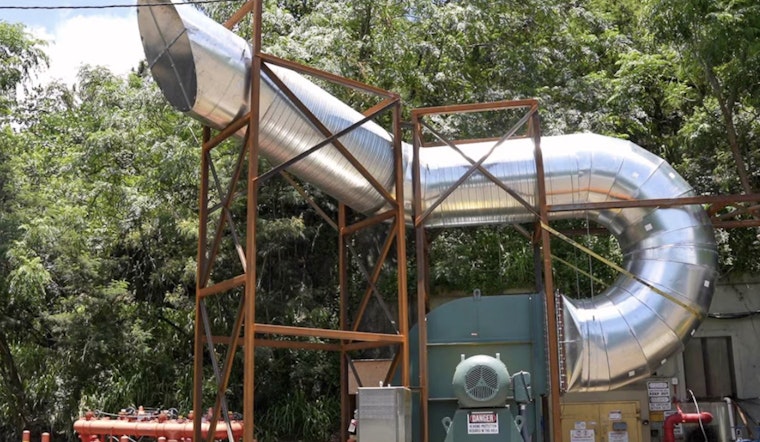
On Wednesday, March 18, 2026, Navy crews started ventilating Tank 12 at the Red Hill Bulk Fuel Storage Facility, a new milestone in the long-running effort to clean out and decommission the troubled site. The degassing process pushes clean air up through emptied tanks to strip out lingering volatile compounds before crews move in to remove sludge and pressure-wash the interiors. It is the latest in a series of carefully choreographed steps to shut down the World War II era complex near Joint Base Pearl Harbor Hickam.
Where This Fits In The Closure Timeline
Tank 12 is the tenth of 14 tanks scheduled for ventilation under the Navy’s phased closure plan, with the work sequenced so that only a limited number of tanks are vented at the same time. According to the Honolulu Star-Advertiser, Navy teams began the initial round of degassing in 2024 and have been working tanks in staggered pairs to better manage air emissions while tank cleaning and pipeline removal continue. Officials say this pacing is designed to keep airborne concentrations low as the task force moves closer to full decommissioning.
Air Monitoring And Public Data
The Navy Closure Task Force Red Hill says it has installed nine air quality monitoring stations around the facility, including one at the Halawa Correctional Facility, to track volatile organic compounds, wind and other atmospheric conditions in real time. During active ventilation, NCTF RH publishes hourly Air Quality Monitoring updates through a mobile app and posts daily summaries on its website, according to the Navy Closure Task Force-Red Hill. The task force says those public data streams will shape day to day operations and help determine when ventilation must pause to protect nearby communities.
The Hawaiʻi Department of Health has set an acute exposure threshold of 38 parts per million by volume for total VOCs and requires the Navy to halt forced ventilation and notify the public if monitors detect levels above that mark. DOH’s conditional approval also mandates at least 12 hours of public notice before any venting begins and immediate reporting of any exceedance, according to the Hawaiʻi Department of Health. The Navy has said it will alert regulators, the Hawaii Emergency Management Agency and the Honolulu Department of Emergency Management, and it has posted a community call line at 808-210-6968; military updates describe the same notification steps and public alerts, per DVIDS.
EPA Sign-Off And Changes To Outreach
The U.S. Environmental Protection Agency formally approved the Navy’s 2026 Community Engagement Plan on Feb. 11, 2026, saying the document satisfies the outreach requirements in the 2023 Administrative Consent Order and explains how the Navy will brief the public during closure work, according to the EPA. The approval letter is publicly posted and lays out the expected cadence of outreach and public updates.
Local reporting says the new plan scales back some formal meetings with the community-led Community Representation Initiative while still requiring Navy participation in state-hosted advisory council sessions, town halls and task force open houses, per the Honolulu Star-Advertiser.
The current degassing phase follows the November 2021 jet fuel release that contaminated the Joint Base Pearl Harbor Hickam water system and sickened and displaced thousands, an incident detailed in coverage by the Associated Press. Federal oversight documents note that the bottoms of the tanks and the facility sit roughly 100 feet above a critical Oʻahu aquifer, a long-standing flashpoint for regulators and community groups, according to Department of Defense oversight reports.
Community advocates say transparent monitoring and open data are crucial, but skepticism remains high. Former Red Hill fuel director and whistleblower Lt. Cmdr. Shannon Bencs has warned at public meetings that “poisonous toxic fumes” can linger in emptied tanks and could travel down Halawa Valley when vented, a concern reported by Hawaii News Now. Environmental organizations and neighborhood representatives say they will be closely watching the hourly monitor readings and the task force’s notifications as degassing moves forward.
What To Watch Next
Officials say tank ventilation will continue in staged pairs, with air monitors, DOH trigger levels and the EPA-approved engagement plan guiding decisions about when crews must pause operations. For hourly air quality readings and public notifications during degassing, the task force is directing residents to the NCTF RH mobile app, its website and the community line at 808-210-6968 for questions or concerns. Regulators and community groups say they plan to maintain tight oversight as the work transitions from degassing into intensive in-tank cleaning and, eventually, long-term decommissioning in the months ahead.





