

























































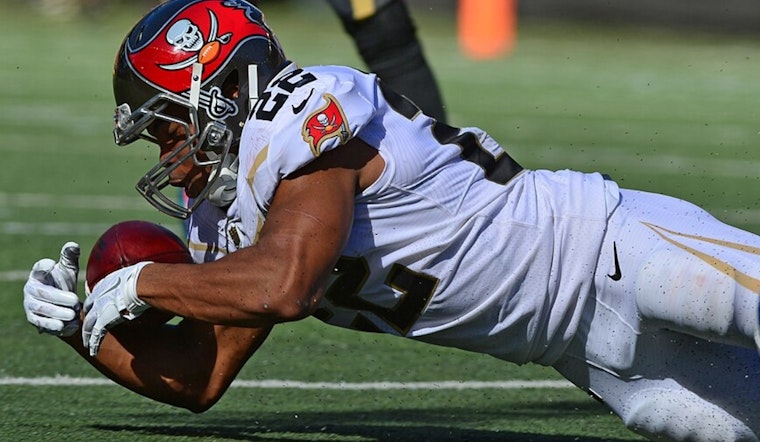
Former Oakland Raiders running back Doug Martin’s family has turned to one of the country’s top brain research centers as they search for answers about his death in Oakland Police Department custody. Civil-rights attorney John Burris said today that Martin’s brain was sent to Boston University’s Chronic Traumatic Encephalopathy Center for testing. Martin, 36, died on Oct. 18, 2025, after officers encountered him inside a neighbor’s home on a night when his parents had called police for help during his mental-health crisis. The family is still waiting on autopsy and toxicology findings while multiple agencies investigate what happened.
Family Turns to Boston University for CTE Answers
According to The Oaklandside, Burris said Martin’s relatives arranged to have his brain examined at Boston University’s CTE Center, which studies the degenerative brain disease in former athletes and others exposed to repeated head impacts. Burris added that he has seen some, but not all, of the officers’ body-worn camera footage. He told the outlet he is not presuming legal action until he reviews official reports. Burris also said the Alameda County Coroner is awaiting toxicology results, which typically take six to eight weeks.
Investigations Mount and Body-Camera Access Questioned
The case is now on the desks of several agencies. The Oakland Police Department’s Homicide Unit and Internal Affairs, the Alameda County District Attorney’s Office and the Community Police Review Agency are all examining the incident, and the officers involved have been placed on paid administrative leave, according to The Associated Press. OPD has so far declined to release the full body-camera video of the encounter, citing privacy concerns and the open investigations, a stance that has frustrated Martin’s family and community advocates pressing for transparency.
What CTE Testing Might Reveal
Boston University’s CTE Center is widely regarded as a leading program for studying chronic traumatic encephalopathy, a brain disease tied to repetitive head impacts that can affect mood, behavior and cognition, per Boston University's CTE Center. Medical reporters and researchers have noted that symptoms often associated with CTE, such as depression, impulsivity and impaired judgment, can look similar to other mental-health or substance-related crises. The San Francisco Chronicle has reported on Martin’s recent struggles and a prior involuntary psychiatric hold this past summer, context that now hangs heavily over the family’s decision to seek CTE testing.
Next Steps for Martin’s Family and Oakland Officials
The Alameda County Coroner’s Bureau is completing an autopsy and will release toxicology results once they are ready, and Burris said the family plans to review those findings before making any decisions about legal action, according to The Oaklandside. For now, Martin’s relatives are asking for privacy as investigators from multiple agencies work to reconstruct the early-morning encounter that ended with his detention and subsequent medical emergency.


