

























































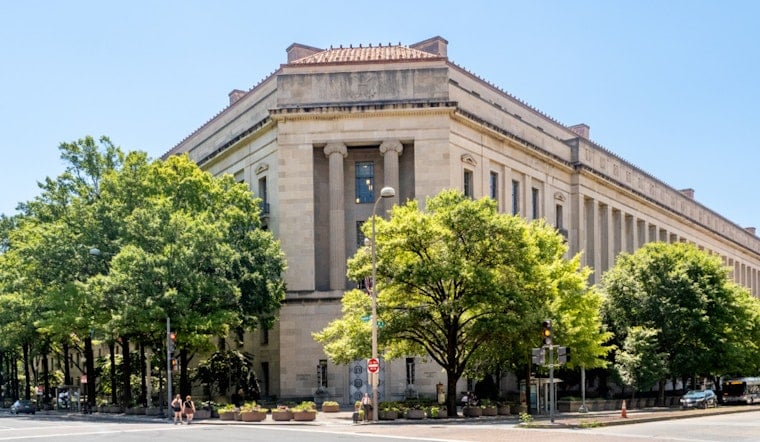
The Justice Department has rolled out a new Model Cities Initiative, unveiled on June 3, 2026, that will steer nearly $300 million to just two to four U.S. cities willing to act as test beds for “whole-of-city” crackdowns on violent crime and efforts to “restore law and order.” To even get in the running, cities must serve at least 100,000 people. Proposals are due Sept. 1, 2026, with awards expected in late 2026. The program folds traditional law enforcement spending together with behavioral-health, victim services, reentry and prevention projects under one big competitive pot.
What the DOJ announced
Acting Attorney General Todd Blanche pitched the effort as a centerpiece of the administration’s public-safety push. In a press release from the U.S. Department of Justice, Blanche said, “The Model Cities Initiative will supercharge our law enforcement partners and restore the rule of law to America’s neighborhoods, towns, and cities.”
The department describes the competition as multi-phase and explicitly brands it as a “whole-of-city” strategy that pairs policing investments with victim services and behavioral-health supports. In other words, DOJ wants city leaders to stop treating cops, courts, hospitals and social services as separate silos and instead knit them into one coordinated safety plan.
How outlets covered it
Local and national outlets moved quickly on the announcement. FOX 10 Phoenix laid out the basics of the program and highlighted the administration’s emphasis on restoring “law and order,” while steering readers back to DOJ’s full release for the fine print. Early write-ups stressed the math: nearly $300 million split among only two to four winners makes this a high-stakes contest for large municipalities.
Who can apply and what the money can cover
Eligible applicants are local government entities serving populations of 100,000 or more. Winning cities must submit a single, citywide plan built jointly by political leaders and criminal-justice officials instead of a patchwork of agency wish lists.
According to guidance on the department’s grants page, allowable expenses include:
- Hiring and retaining sworn and non-sworn staff
- Equipment and technology, including real-time crime centers and certain surveillance tools
- Training and facility costs
- Mental-health and substance-use services
- Reentry programs
- Victim services
- Youth intervention and prevention efforts
More administrative details and application instructions are available on the U.S. Department of Justice grants site.
Privacy and civil-liberties questions
Civil-liberties advocates are already eyeing the fine print. Some of the tools DOJ says the money can buy, such as automated license-plate readers, expanded camera networks and certain AI systems, carry familiar concerns about mass surveillance and mission creep.
Groups including the American Civil Liberties Union have documented how automated license-plate readers and similar technologies can generate long-lasting databases of people’s movements, often with uneven oversight and inconsistent rules on how long that data is kept or who can access it.
Political context and what to watch
The rollout comes wrapped in sharp political branding. DOJ is presenting the initiative as part of its “Make America Safe Again” agenda and has it signed by Acting Attorney General Todd Blanche, who became the department’s acting chief earlier this year. As The Washington Post has reported, Blanche’s tenure and the department’s shifting priorities are drawing unusually close scrutiny.
That attention is likely to land squarely on two fronts: whether the chosen cities can show measurable drops in violent crime and how transparent they are about any new surveillance systems, data-sharing practices and enforcement tactics funded under the program.
How cities can apply
DOJ is asking for cohesive, coalition-built proposals that spell out how federal dollars would be coordinated across police, health systems and social services rather than spent in isolation. Applications are due Sept. 1, 2026.
The department has directed cities to email application materials to [email protected] and send technical questions to [email protected]. Initial award decisions are expected in late 2026.
For municipal leaders weighing a bid, the calculus is straightforward but not simple: up to a share of $300 million in federal support for crime reduction on one side, and on the other, the heightened public and political scrutiny that comes with deploying new enforcement and surveillance tools under a very bright national spotlight.





_(53840386529).jpg)