

























































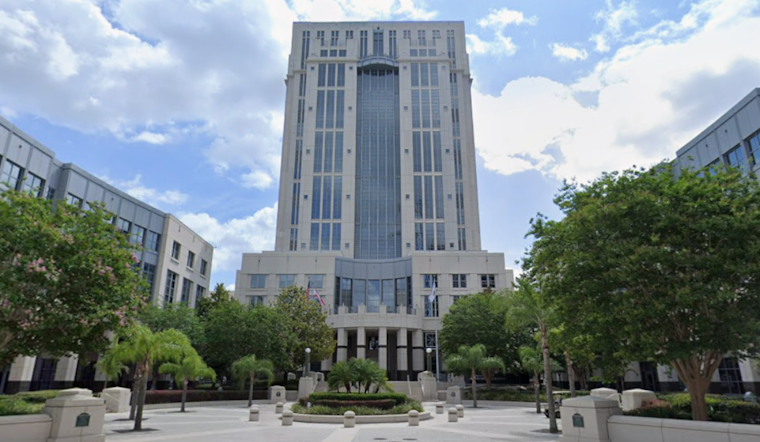
A longtime Orange County judge is staring down possible discipline from the state’s highest court after a pair of courtroom dustups that included racially charged remarks and telling public defenders to “shut up” in open court.
The Florida Judicial Qualifications Commission has found that Ninth Judicial Circuit Judge John E. Jordan violated the state’s Code of Judicial Conduct after comments that included asking whether a Black person had ever “chopped cotton” and suggesting a defendant could “work the land” as community service. The panel’s recommended sanction now heads to the Florida Supreme Court for final review.
As reported by the Orlando Sentinel, the investigation opened in October and centers on two separate Orange County courtroom episodes. Court records show one incident occurred during jury selection in an aggravated battery case in April and another nearly four months later at a plea hearing for a Black defendant. The commission concluded that Jordan violated multiple sections of the judicial code and said he has agreed to accept the recommended sanction, subject to the Florida Supreme Court’s approval.
What the commission found
The commission determined that Jordan’s conduct breached four sections of the Code of Judicial Conduct. The panel noted that Jordan admitted the misconduct and expressed deep regret. At the same time, commissioners said they did not find that Jordan had issued rulings improperly based on race.
Even so, the commission expressed concern that Jordan did not fully appreciate how inappropriate his comments were. In its report, the panel recommended discipline to protect public confidence in the judiciary.
Remarks that triggered the review
According to court records, Jordan told public defenders to “shut up” during one hearing and later suggested a defendant could “work the land” as community service, language the commission flagged as racially insensitive. Documents also recount that he asked whether a Black person had ever “chopped cotton,” a phrase the panel singled out for scrutiny.
The Orlando Sentinel detailed how, during an April exchange as tensions rose on the record, Jordan also declared, “I’m declaring a mistrial.”
Judge's response and next steps
In his response to the commission, Jordan said he is not racist and pointed to spending summers working on relatives’ farms in Texas as he tried to counter the impression left by his remarks. The Judicial Qualifications Commission wrote that Jordan acknowledged the misconduct and expressed deep regret.
With the commission’s recommendation now filed, the case moves to the Florida Supreme Court. The justices have the authority to accept, reject, or modify the proposed discipline.
Why it matters
The case lands amid heightened scrutiny of judges’ behavior in courtrooms across Florida and highlights how the state’s oversight process can reach sitting judges. Earlier this month, the Florida Supreme Court accepted a recommendation to publicly reprimand a Broward judge, as reflected in the court’s recent order on that case (Justia).
The outcome in Jordan’s matter will depend on how the high court evaluates the commission’s factual findings and recommended sanction.
Legal implications
If the Florida Supreme Court approves the recommendation, Jordan would face formal discipline intended to preserve public trust in the judiciary. His current term runs through January 2027, and any final order from the court would become part of the public record and could influence future cases and judicial oversight in the circuit.




