

























































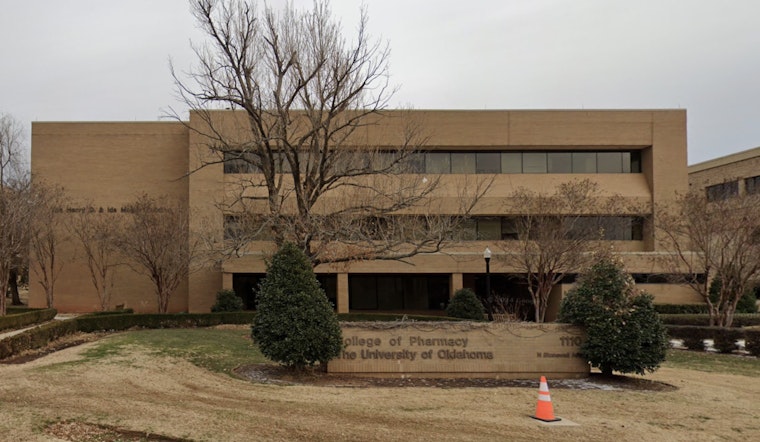
The University of Oklahoma's College of Pharmacy is putting a major piece of high-tech hardware on the OU Health campus: a new cyclotron facility that will let the school produce PET radiopharmaceuticals in-state. University leaders say the project should cut down on long drives, higher costs and treatment delays for patients across Oklahoma. The cyclotron will generate short-lived radioisotopes for advanced PET imaging and emerging "theranostic" cancer therapies, building on services the college already provides through its nuclear pharmacy.
Project cost and schedule
Local reporting puts the College of Pharmacy's investment at about $16 million for the construction and equipment, and officials expect the facility and installation to be finished by next year. OU Health’s Robert Mannel has called the project “a landmark moment for the state of Oklahoma,” and planners told reporters the cyclotron is large enough to require heavy shielding and a crane to set the machine in place. Those details were reported by KOCO.
Where it will sit on campus
OU says the work will include construction and a modest addition at its College of Pharmacy on the OU Health Sciences campus, positioned next to the college's existing nuclear pharmacy operations and statewide delivery network. The nuclear pharmacy already prepares and ships time-sensitive doses to hospitals and clinics around the state, and the new production site is meant to let OU manufacture PET tracers locally instead of ordering them from far-off suppliers. As detailed by OU College of Pharmacy.
The equipment and contracts
According to 24x7, the university has authorized roughly $6.84 million for the cyclotron equipment and awarded the purchase to GE HealthCare as part of its tracer-center plan. Trade coverage and vendor notices identify the GE PETtrace 890 as the system slated for OU, a model designed to support both clinical PET tracers and investigational theranostic compounds.
Why local production matters
Radiopharmaceuticals do not travel well over long distances. They decay quickly; for example, FDG, a common PET tracer, loses about half its activity every two hours. Shipping doses in from out-of-state producers cuts into the usable dose and can add cost and scheduling headaches for local clinics. OU writers and researchers note that for many Oklahomans, the nearest practical cyclotron has been in Dallas, roughly 200 miles away, a gap that has created real access problems clinicians say the new facility will help address. The logistical challenges and state-level case for local production are explained in detail by Sooner Magazine.
Research, training and patient access
University and OU Health leaders say an on-campus cyclotron will let researchers create and test new radiopharmaceutical agents much closer to real time, which could speed translational work and make investigational tracers easier to use in clinical trials. The University of Oklahoma Board of Regents materials also highlight expanded hands-on training for pharmacy, chemistry and engineering students, along with stronger diagnostic and therapeutic capabilities for the Stephenson Cancer Center. Those education and research benefits are central to the university's justification for the project, according to University of Oklahoma Board of Regents documents.
Officials say site work and machine installation will continue into the coming year, followed by certification and validation steps before clinical production begins. University leaders frame the investment as both a practical win for patients across Oklahoma and a significant research boost for OU once the facility is operational, as reported by KOCO.





