

























































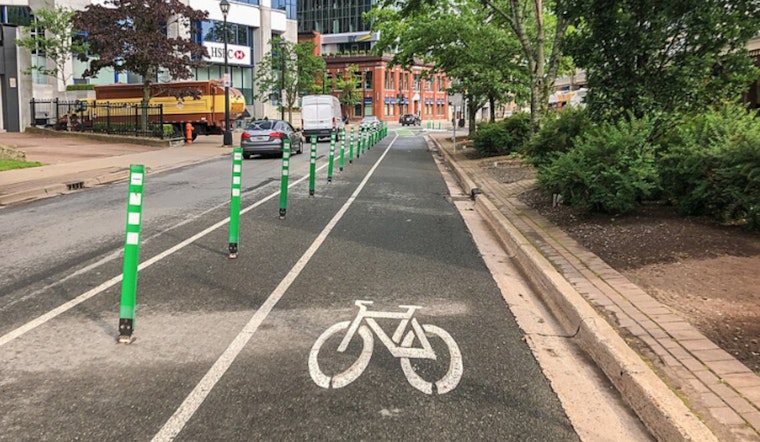
Los Angeles is locking in a major remake of Pico Boulevard, a 3.4-mile stretch between Crenshaw Boulevard and Figueroa Street that is set to trade car space for protected bike lanes, new crosswalks, and upgraded signals. Construction is expected to kick off later in 2026, with the protected lanes scheduled to open by spring 2027 ahead of the 2028 Olympics, along with sidewalk and curb ramp repairs and sweeping changes to on-street parking.
What LADOT will change
The Los Angeles Department of Transportation’s blueprint trims through traffic lanes to carve out room for bike lanes that are separated from moving cars by curbs or other barriers, along with new pedestrian and bicycle signal crossings. The plan adds new traffic signals at Manhattan Place and New Hampshire Avenue and includes repairs to sidewalks and curb ramps, according to LADOT. Project materials show the corridor running from Crenshaw to Figueroa, designed to plug directly into the city’s broader bicycle network.
Safety data behind the push
City collision records show that between 2014 and 2023, this slice of Pico saw roughly 75 serious crashes that caused severe injuries or deaths, with pedestrians involved in most of those incidents and accounting for all 11 fatalities, as reported by LAist. About 12% of injury collisions on the stretch involved cyclists, according to the same data. Officials say shortening crossing distances and adding physical protection to bike lanes are meant to bring those numbers down rather than just shuffle them around.
Design choices and community reaction
Public outreach last year pulled in more than 1,100 survey responses, and planners say nearly three-quarters of respondents chose a protected facility over a simple painted lane, according to reporting by Streetsblog. Neighborhood councils and some business owners have raised alarms about losing curbside parking and loading zones, even as bike and pedestrian advocates keep pushing the safety argument. Streetsblog also notes the project draws on Metro Active Transportation grants and is timed to be finished before the 2028 Olympics.
Parking, timing, and what to expect
LADOT’s current design would cut roughly 270 of the corridor’s approximately 480 on-street parking spaces, with most of the removals on the north side, while extending hours for about 95 remaining spaces and adding some nearby side street parking where it is feasible, LAist reports. LADOT spokesperson Colin Sweeney told reporters the reconfiguration could add about one to two minutes of travel time per mile during peak periods, but the department does not expect major spillover traffic and says it is prepared to tweak signal timing or turn restrictions if needed. The agency plans to post an updated fact sheet and a feedback form in English, Spanish, and Korean on its project page as design details are finalized, and open house materials and a project flyer are already available on the LADOT site.
Construction is slated to begin later in 2026, with the protected lanes targeted to open by spring 2027, though parts of Pico near the Convention Center are already closed through March 31, 2028, for the expansion project, which could mean phased work and detours, according to Urbanize LA. City officials say they will keep an eye on how the corridor functions once the changes are in place and will adjust signals and circulation based on what actually happens on the ground.





