

























































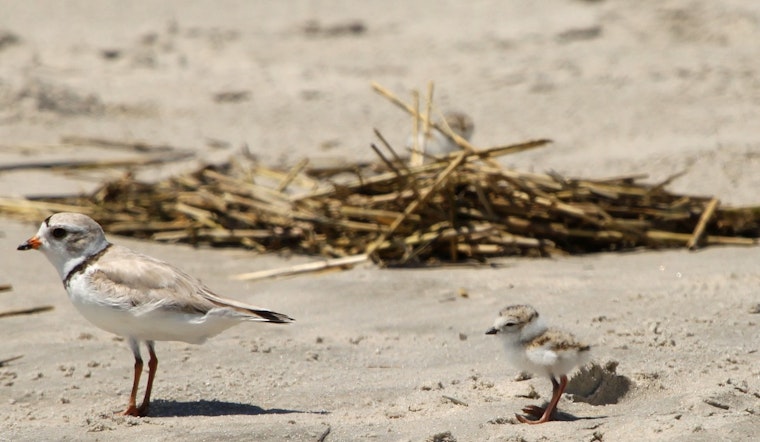
In Massachusetts beach towns, summer is turning into a showdown between tire tracks and tiny bird tracks. Local officials are pressuring the state to loosen shorebird-protection rules they describe as "overly strict," arguing that decades-old guidance is increasingly shutting down long-used walkways and oversand driving routes on narrow barrier beaches just when the season gets busy. They acknowledge the conservation success story of more nesting birds, but say it has come with growing social frustration and lost access.
Representative Kenneth P. Sweezey of Duxbury has filed House Bill 5139, which would force the Division of Fisheries and Wildlife to put its Guidelines for Managing Recreational Use of Beaches to Protect Piping Plovers, Terns, and Their Habitats on a regular tune-up schedule. Under the bill, the agency would have to review those guidelines at least once every two years, consult municipal or regional beach managers during each review, and hold two public hearings in the affected communities. The text of the measure on the Massachusetts Legislature site also requires at least 14 days' notice for hearings and says they must be held within the towns that are directly impacted.
Sweezey has also put in companion proposals aimed at creating more parity among beaches and tightening the conditions under which over-sand vehicle access can be curtailed, arguing that some local closures have gone too far. As reported by Boston Herald, he told the paper that current restrictions block reasonable public use and has proposed limiting broad closures unless a species is federally listed or otherwise regulated under the Endangered Species Act.
Plovers Are Back, But Not Problem‑Free
State and nonprofit stewards say the rebound of shorebirds is real, but so are the management headaches on crowded stretches of sand. The Trustees of Reservations reported about 1,221 piping plover pairs in 2025 and warned that productivity still fell short of recovery goals, pointing to a May nor'easter and elevated nest predation at many nesting sites.
State conservation planning drives the seasonal fencing, posted buffers, and temporary road closures meant to protect nests and chicks, and managers argue those measures remain necessary even as numbers climb. According to MassWildlife, Massachusetts now supports the largest Atlantic Coast breeding population of piping plovers and has seen substantial increases since the birds were federally listed in the 1980s.
Local Frustration And Access Fights
For towns such as Duxbury, that balance can feel lopsided. Crossovers and back roads are often closed when nests are active, and oversand vehicle permits have turned into political lightning rods. The Town of Duxbury details seasonal oversand-permit rules and fees in its beach operations updates, and local advocates told WCVB that restrictions have "limited our access to be out there." For residents who have driven, fished, or walked these routes for generations, seeing gates go up around prime summer weekends has been a particular sore spot.
Conservation Response
Wildlife advocates counter that the recovery is still fragile and that short-term closures, predator control, and hands-on stewardship are precisely what allow plovers to coexist with heavy human use on busy coasts. Mass Audubon and other stewards have pointed to record or near‑record nesting in recent seasons as evidence that the current playbook is working. Wildlife biologists quoted in Boston Herald emphasize that supporting reasonable public access does not have to be "anti‑birds," so long as protections around nests and chicks remain firm.
What Happens Next
House Bill 5139 was reported to Joint Rules, and a joint hearing was scheduled for March 4, 2026. If the bill moves forward, it would lock in recurring reviews and public hearings, requiring beach managers and the state to revisit the guidelines on a regular basis instead of letting them sit on the shelf. The legislature's docket lists the hearing date, and the bill language would make public input and municipal consultation a formal part of any future revisions, potentially reshaping how towns handle crossovers and oversand access ahead of the next summer season.
Legal Notes
Any update to state guidance will still have to live within federal limits. The U.S. Fish and Wildlife Service lists the Atlantic Coast population of piping plovers under the Endangered Species Act, and those federal protections constrain how and when states and towns can allow activity in nesting areas. For the federal species status and background, see the U.S. Fish & Wildlife Service species page at U.S. Fish & Wildlife Service.
The debate now shifts into committee rooms and town halls, where local officials, conservation groups, and beach users are likely to clash over what counts as "reasonable" access. With summer approaching, the stakes are highly practical: who gets to use which stretches of beach, when vehicles and people can be on the sand, and how managers keep vulnerable nests intact while still letting coastal communities enjoy the shoreline they rely on.





.jpg)