

























































For Colorado families who feel stuck in their ZIP-code schools, a big change is coming from Washington. A new federal Education Freedom Tax Credit will let taxpayers redirect up to $1,700 of what they would normally owe in federal income taxes into scholarships for K–12 students. Gov. Jared Polis has already filed the paperwork to get Colorado in the game, and local scholarship groups say the shift could quickly expand aid for low-income families. The first donations that qualify for the credit will not roll in until 2027, but both organizers and critics are already gearing up for what comes next.
How the credit works
The program offers a dollar-for-dollar federal income tax credit for voluntary donations to certified Scholarship Granting Organizations, or SGOs. Taxpayers can claim up to $1,700 per year, and SGOs then use that money to award scholarships that can pay for tuition, tutoring and other K–12 education services.
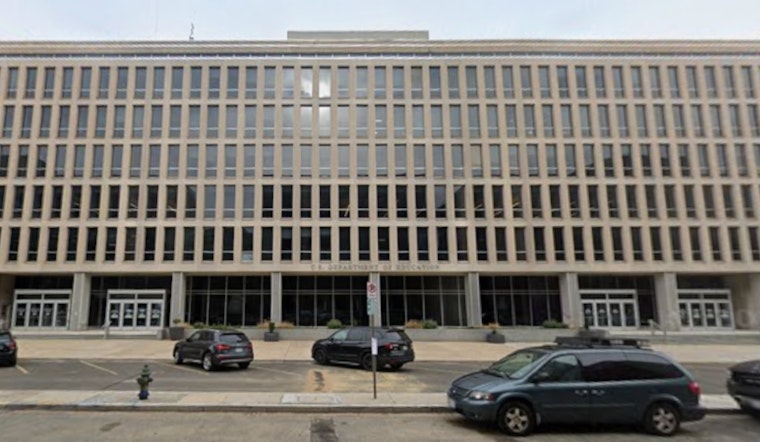
The basic mechanics, along with details on who qualifies and what the money can be used for, are laid out in a joint fact sheet from the U.S. Departments of Education and Treasury. The U.S. Department of Education summarizes the federal rules and timing for the credit.
Polis signs on while the politics swirl
Colorado’s decision to opt into the program drops the state right into the middle of a long-running national fight over school funding and school choice. Gov. Jared Polis formally signaled Colorado’s intent to participate, arguing that the move would broaden educational options for families. Coverage of the decision notes that Polis submitted the opt-in paperwork during an education event this winter, a move that set him apart from some other Democratic governors who are keeping their distance from the new federal plan. Colorado Newsline detailed the governor’s step and the partisan tug-of-war surrounding the program.
Local scholarship groups could see a surge
Supporters say the credit is poised to supercharge existing local SGOs that already provide scholarships and other supports to students. An op-ed in the Denver Gazette singles out groups such as Parents Challenge, ACE and Seeds of Hope as likely beneficiaries and portrays the policy as a way for funds to "follow the child." In that vision, qualifying families could get faster help with tutoring, summer programs or switching schools, using scholarships backed by redirected federal tax dollars.
What Parents Challenge and others say
Parents Challenge, a Colorado Springs organization founded by local civic leaders more than 20 years ago, describes itself as serving thousands of scholars and notes that it has grown beyond its original footprint this year. The group’s own materials highlight a long-running scholarship program, and recent local coverage documents its expansion into Pueblo and other communities in southern Colorado. Parents Challenge and the Colorado Springs Gazette have tracked that growth.
Critics warn the credit could drain public school dollars
Not everyone is cheering. Education researchers and advocacy groups caution that steering private donations through SGOs can ultimately put pressure on public school budgets and erode district stability. Those worries have surfaced in recent national reporting on the new federal program.
Coverage from Stateline and local watchdog outlets shows teachers unions and policy analysts urging lawmakers to move carefully, warning about long-term effects on public school funding and oversight if large sums shift into scholarship programs.
Timetable and scale
Under the federal rollout, the tax credit is scheduled to kick in for donations starting in 2027, and officials say it could steer billions of dollars into scholarships each year. The U.S. Department of the Treasury’s fact sheet projects substantial growth, estimating that the credit could generate roughly $7.5 billion in additional education funding annually. The U.S. Department of the Treasury outlines those figures.
The U.S. Department of Education’s release, meanwhile, lays out the basics of the program and names the early group of states that have already signaled they will participate. The U.S. Department of Education details the initial lineup and the overall framework.
For Colorado families and the nonprofits that hope to serve them, the next year is about getting their ducks in a row. SGOs will need to secure certification, build up their donor lists and prepare outreach so that, once 2027 arrives, scholarships can flow quickly to students who meet the income and eligibility rules. How much that ultimately helps local classrooms, and which students benefit the most, will be at the center of fresh political fights and some very close monitoring in the months ahead.




