

























































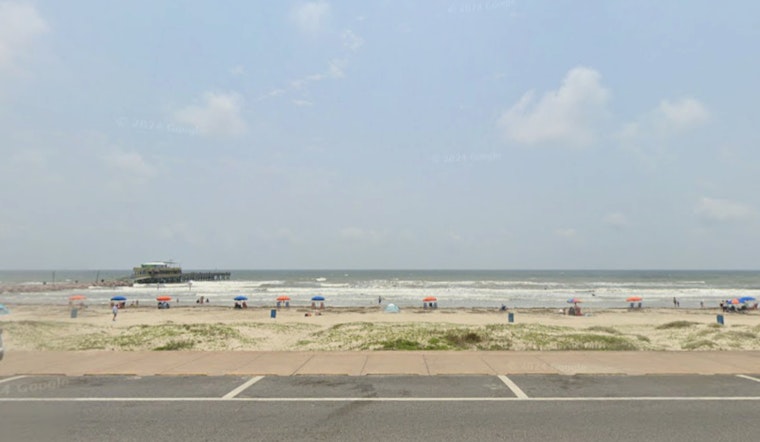
As spring break crowds swarm the Texas coast, most Gulf beaches are testing clean for fecal‑indicator bacteria. Still, a handful of sites around Galveston and the Bolivar Peninsula are flashing "medium" readings on the state’s Beach Watch map, a level health officials say is worth keeping an eye on. Because the map updates quickly after rain and runoff, a calm green stretch of shoreline can turn yellow in just a few days, so beachgoers are urged to double‑check conditions before wading in.
Yellow flags near Galveston and Bolivar
Water samples collected in the first week of March showed medium enterococcus levels at a few Galveston locations. The Princeton Street station posted roughly 40 mpn/100ml, while the San Luis Toll Bridge site came in around 63 mpn/100ml. Two monitoring points on the Bolivar Peninsula were also in the medium zone, near 40–41 mpn/100ml.
At the same time, popular destinations including South Padre Island, Isla Blanca Park, Mustang Island, Port Aransas, Surfside and large portions of Galveston Island were all testing in the low range. Those readings and site notes were compiled by MySA.
How Texas Beach Watch tracks the water
The Texas General Land Office runs the Texas Beach Watch program, which regularly samples coastal waters for enterococcus, a fecal‑indicator bacteria, and posts the results on an online stoplight‑style map. Green pins mark readings of about 35 mpn/100ml or fewer, yellow covers roughly 35–104 mpn/100ml, and red appears when samples top 104 mpn/100ml. In March, sampling ramps up to weekly to keep pace with spring break traffic. Those program details are outlined by Texas Beach Watch.
What those numbers mean for swimmers
Enterococcus itself is an indicator rather than a specific germ, but higher counts signal a greater chance of gastrointestinal and other infections, especially for people with open cuts or weakened immune systems. The Galveston County Health District notes that Beach Watch advisories are informational only, so beaches do not close when levels rise. When a site tests above the EPA threshold of 104 cfu/mpn per 100 milliliters, it is sampled again daily until results drop back down, which typically takes about 48 hours.
For more on who is at higher risk and how local advisories work, the Galveston County Health District offers additional guidance.
Checking conditions before you hit the sand
Before loading up the cooler and boogie boards, beachgoers can review the interactive map and station‑by‑station results and sign up for alerts tied to their favorite spots so they get a heads‑up if a site flips from green to yellow or red. If a planned swimming area is showing a yellow result, shifting a bit down the shoreline or postponing nonessential water time is an easy way to cut risk, especially for people living with diabetes, liver disease, cancer or other immune‑suppressing conditions.
The Texas General Land Office explains how to view readings and set notifications through Texas Beach Watch.




