

























































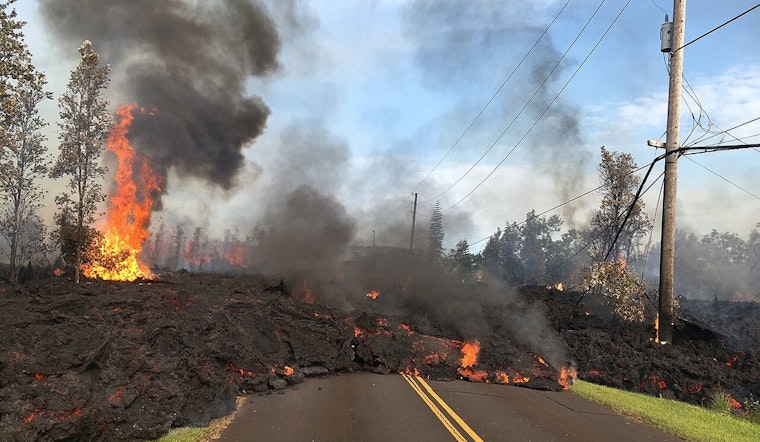
Hawaii County’s Voluntary Housing Buyout Program, tied to the 2018 Kīlauea eruption, is heading into its final stretch, with officials saying the bulk of lava-impacted parcels have already been acquired, and staff are now focused on clearing and stewarding the remaining lots. For many Puna residents, the county offer has meant leaving repeat risk zones behind instead of rebuilding in areas still vulnerable to future eruptions.
How the buyout worked
The buyout effort was built on roughly $107 million in HUD Community Development Block Grant-Disaster Recovery funds and launched by the county’s disaster recovery division in 2021. Offers are based on 2017 pre-eruption appraised values, with maximum awards set at $230,000 for primary homes, $142,000 for secondary homes, and $22,000 for undeveloped lots, according to Hawaiʻi County.
Where the numbers stand
County planning documents show the program received more than 800 viable applications, and that hundreds of properties have already been purchased as officials move through phased closings. The county’s Consolidated Plan lists about 438 purchases to date, an average closing price of roughly $175,800, and around 326 active applicants still in the pipeline, with the program expected to finish by the end of 2026, according to Hawaiʻi County Housing Division.
Local homeowners' choices
Local reporting has followed individual families who chose buyouts instead of returning to Leilani Estates or Kapoho, and those personal decisions have helped speed up the county’s acquisitions. Disaster Recovery Officer Douglas Nam Le told the Star-Advertiser that the program has given some residents an alternative to moving back into the inundation area.
Final lots, demolition and money
The county says properties bought through the program that still have standing structures will be demolished and the land managed for compatible open-space uses, with demolition and post-acquisition stewardship paid from program funds. Earlier coverage noted the county had adjusted payout caps for secondary homes so it could serve more applicants, an update that followed a 2024 announcement that roughly $38 million remained in the grant pool, per Hawaiʻi Public Radio. County officials have cautioned that the federal funding process, including environmental reviews and lien clearance, makes each closing time-consuming, so a small number of parcels remain in various stages of escrow or title vetting.
Policy and the bigger picture
The buyouts are part of a HUD-approved recovery plan that prioritizes low- and moderate-income households and aims to convert repeatedly threatened lots to non-housing uses as a form of managed retreat. HUD guidance frames the program as addressing unmet housing needs from the 2018 eruption while requiring the county to follow federal rules on benefit prioritization and environmental review, according to HUD planning documents. For more background on HUD’s CDBG-DR funding and program conditions, see the Department of Housing and Urban Development guidance and the county’s action plan.
Applicants or former homeowners with questions can contact the Kīlauea Voluntary Housing Buyout Program by phone at (808) 961-8996 or by emailing [email protected] for the latest status updates and next steps.





