

























































On a low-key industrial block in Canoga Park, Valley machinists and engineers are quietly finishing hardware that will carry some very loud responsibility on NASA's next crewed trip to the Moon. L3Harris's Aerojet Rocketdyne operation in the San Fernando Valley is building and updating RS-25 core stage engines that will sit at the "business end" of the Space Launch System for Artemis II. All four will burn for about eight minutes and together push out more than two million pounds of thrust during the climb to space.
"We start building the engines from the raw material," Mark Aldaba told NBC Los Angeles, walking through the machining, welding, and assembly work that happens on the Canoga Park floor. The local profile, published March 30, underscores the plant's role in getting RS-25 engines ready to roar to life in the final seconds before Artemis II lifts off. For veteran Rocketdyne hands and newer hires alike, the job links the Valley's deep manufacturing roots to the current era of human spaceflight.
How the RS-25 Powers SLS
The quartet of RS-25s forms the Space Launch System core stage propulsion, delivering a combined punch measured in the millions of pounds of thrust during the roughly eight-minute run to orbit, according to NASA. Launch timing is surgical: onboard computers order a staggered start sequence beginning at about T-6.36 seconds, with each engine coming to life a fraction of a second apart to help control acoustic and vibration loads, per NASASpaceFlight. In those last heartbeats before liftoff, engine start and health checks decide whether the rocket flies or the countdown stops.
Made in Canoga Park
On its site, L3Harris notes that the Canoga Park facility is assembling shuttle-heritage RS-25s while also ramping up production of newly manufactured engines for later Artemis missions. The company points to updated controllers and 3D-printed parts as examples of modern manufacturing tools aimed at trimming build time and cost without sacrificing the engines' track record for reliability. That mix of refurbishment and fresh production keeps a rare concentration of high-skill aerospace manufacturing jobs in the Valley.
Hot Fires And Certification
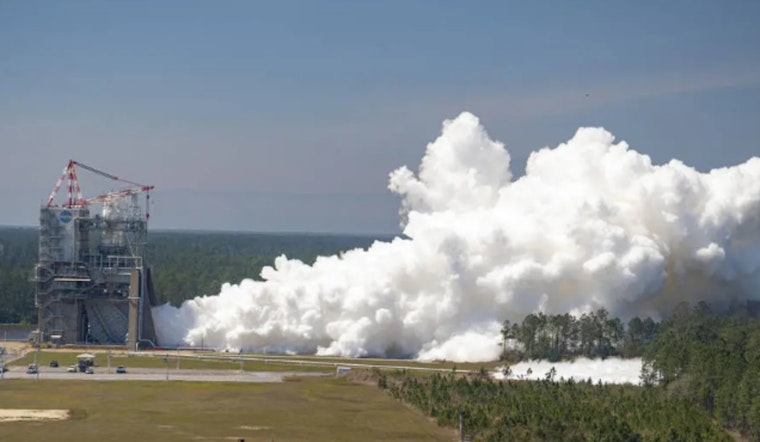
Full-duration fire runs and acceptance tests on NASA stands are central to certifying the redesigned RS-25, and both L3Harris and NASA have highlighted completed firings at Stennis Space Center. "This successful acceptance test shows that we've been able to replicate the RS-25's performance and reliability," the company said after one milestone sequence at Stennis. Only after those checks are in the books are engines cleared to ship to Michoud for installation in the SLS core stage headed to Kennedy Space Center.
Local Roots And Jobs
The Los Angeles City Council record specifically notes that RS-25 production and upgrade work happens in Canoga Park, tying the program to local economic activity and to federal lobbying on its behalf. Beyond civic bragging rights, the engines support a roster of machine tool operators, welders, engineers, and test technicians, all roles that have become harder to find in the region. For many across the San Fernando Valley, the program feels like a straight line from Rocketdyne's postwar legacy to the present-day aerospace supply chain.
What Comes Next
NASA describes Artemis II as a roughly 10-day crewed lunar flyby that will carry Reid Wiseman, Victor Glover, Christina Koch, and Jeremy Hansen and put Orion and its linked systems through their paces in deep space. The mission is set to send the crew on a looping figure eight around the Moon and back, collecting data and proving out hardware and procedures that will shape future Artemis landings, according to NASA's Artemis II press kit. For the Canoga Park workforce, launch day will be the moment when a lot of careful shop work turns into a very public test of local craftsmanship.
Six seconds before liftoff, the spotlight in the control room shifts to the engines, and the RS-25s that left a Canoga Park building will finally do what they were built for: push people into deep space. Whether Artemis II leaves the pad on its current schedule or after more testing, the Valley's role in building the hardware gives Los Angeles a small but very real stake in sending humans back toward the Moon. Until then, final checkouts, integration, and a few remaining tests will determine when the rocket makes its slow roll to the pad at Kennedy.




