

























































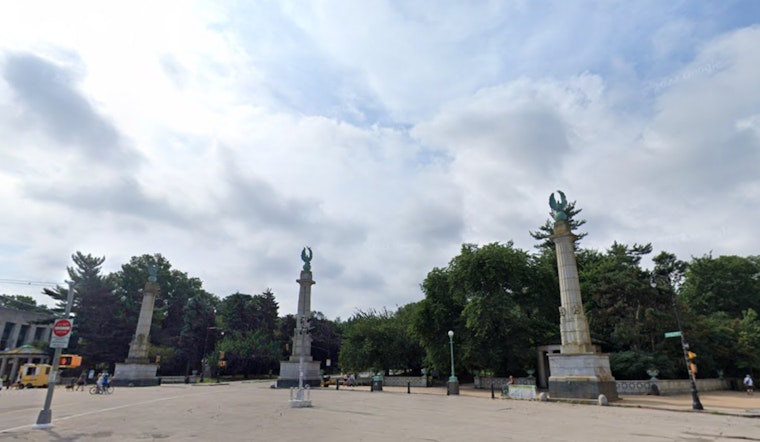
Roughly 20,000 people turned Park Slope into a miles-long protest corridor on Saturday, filling Prospect Park West from Garfield Place down to Bartel Pritchard Square. Families with strollers, veteran organizers and first-time marchers moved together, singing, chanting and passing out fliers as part of a nationwide day of action that briefly transformed a usually low-key stretch of the park into a full-scale political rally.
According to Brooklyn Paper, local co-organizers Dani Newman and Kathryn Krase recruited more than 100 volunteers and pegged attendance at about 20,000 people. The outlet reported that the Park Slope march was designed as an easier, closer-to-home option for residents who could not make it into Manhattan's larger demonstration, with an emphasis on music, handmade signs and neighborhood speakers. Local Assemblymembers Jo Anne Simon and Robert Carroll joined the procession, giving the march an added dose of political visibility.
According to NoKings.org, organizers had registered more than 3,000 local events ahead of Saturday and framed the effort as nonviolent and community-centered. The Associated Press reported that organizers estimated at least eight million people took part nationwide, and quoted Indivisible's Ezra Levin calling the mobilization "historic." Marchers in Park Slope and across the country cited a mix of concerns, including federal immigration enforcement, the war in Iran, rising costs of living and what they see as threats to reproductive and LGBTQ rights.
Big-city crowds and marquee names
Across the river in Manhattan, demonstrators converged at Columbus Circle and Central Park South before heading down Seventh Avenue, through Times Square and toward 34th Street, drawing national coverage. CBS New York reported that New York Attorney General Letitia James, Public Advocate Jumaane Williams, Rev. Al Sharpton and actor Robert De Niro spoke at an early press conference, with De Niro urging people to carry the message "from the streets to the ballot box." City officials later said street closures were lifted once the crowds moved on.
The vast majority of marches stayed peaceful, but some cities saw tense moments. The Associated Press reported that Los Angeles police declared an unlawful assembly outside a federal detention facility, used tear gas and arrested dozens of people after some in the crowd allegedly threw objects at officers. Organizers and local safety teams pointed back to No Kings trainings and volunteer medics as tools meant to keep events lawful and focused on de-escalation, even when tempers ran high.
Why Park Slope hit the streets
Participants told Brooklyn Paper they were motivated by a blend of neighborhood issues and national worries, from ICE enforcement and housing pressures to perceived risks to reproductive and civil-rights protections. Several marchers and activists pointed to Project 2025, a Heritage Foundation transition plan, as a key factor pushing them out the door. Park Slope organizers said they saw the neighborhood action as both a protest and a way to seed longer-term local organizing in the weeks ahead.
Project 2025 has been described as an expansive, nearly 1,000-page policy blueprint from the Heritage Foundation that critics say would overhaul federal agencies and cut back protections in areas such as education, health care and civil rights, according to Time. That policy fight showed up on hand-lettered posters and in rally speeches from coast to coast, giving marchers a shared list of grievances to organize around. For people in Park Slope, that national argument landed alongside more immediate questions about family security and financial strain.
Organizers say Saturday was intended as a kickoff, not a finale, pointing to trainings and follow-up events listed on NoKings.org. In Park Slope, volunteers said they plan to keep the momentum going with neighborhood tabling and voter outreach in the weeks ahead, describing the march as one step in a longer push to carry protest energy all the way to the ballot box.


