

























































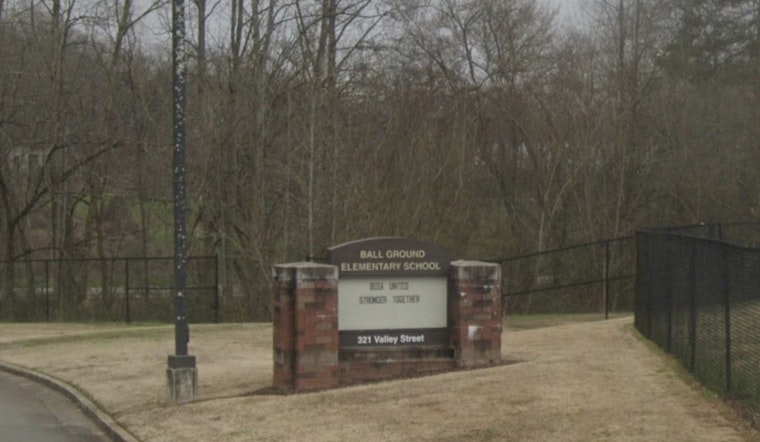
Drivers flying past Ball Ground Elementary STEM Academy are about to get some high-tech company. Ball Ground is rolling out automated speed cameras around the school, a move city officials say is aimed squarely at drivers who push past the school-zone limit during morning drop-off and afternoon pick-up.
The system uses high-definition cameras and automatic license-plate readers on streets near the campus to flag speeders during tightly defined windows. City briefing slides explain that the cameras will run only on school days, from one hour before the first class until one hour after the last, and that they will generate violations only for vehicles going more than 10 miles per hour over the posted school-zone limit.
According to WSB-TV, Ball Ground is partnering with RedSpeed on the rollout and funding it through allocations under House Bill 978, so city leaders say taxpayers will not be tapped for upfront costs.
“Protecting children as they travel to and from school is one of our highest priorities,” Greg Parks, senior vice president of RedSpeed, said in a statement to WSB-TV. City officials say the system’s high-definition imaging and automatic license-plate recognition will be tied into AMBER Alert and Temporary Protection Order systems to help speed emergency responses.
The city says drivers will get plenty of notice before fines begin, with outreach, warning signs and an initial period in which violations generate only fee-free warnings.
How Enforcement Will Work
Local documents spell out the fine print. The RedSpeed Georgia LLC system will only issue a violation when a vehicle is recorded at 11 miles per hour or more above the current school-zone speed limit. Cameras will not operate on weekends or school holidays, according to City of Ball Ground briefing slides.
State law sets civil penalties at 75 dollars for a first violation and 125 dollars for each one after that. Unpaid citations can ultimately lead to a refusal to renew a vehicle’s registration, according to a summary of the statute and program rules from the National Conference of State Legislatures.
The city also notes that these are civil citations, not criminal tickets. They are not supposed to add points to a driver’s license or automatically trigger higher insurance rates.
Funding And Where The Fines Go
Ball Ground officials say the RedSpeed rollout is made possible by state allocations that support school-zone enforcement technology. Any money collected from citations, they add, has to be spent on public-safety purposes such as equipment or school resource officers, not folded into general fund spending for unrelated needs. That restriction is part of the statewide framework that authorized school-zone automated enforcement and helped shape local programs across Georgia.
During startup, RedSpeed will handle equipment, maintenance and permitting for the program, according to the city’s announcement covered by WSB-TV.
Statewide Fight Over School-Zone Cameras
Ball Ground is stepping into a debate that has been simmering across Georgia ever since lawmakers approved school-zone cameras in 2018. Legislators have repeatedly floated bills to repeal or tighten the law that allowed automated enforcement in the first place.
Reporting from AP News and updates on the Georgia Municipal Association bill tracker show critics arguing that these devices can morph into revenue generators instead of staying strictly safety-focused. Supporters, for their part, point to data from camera sites that show drivers slowing down when they know they are being watched.
What The Research Says About Safety
State-level research and university studies have generally backed the idea that automated speed enforcement cuts down on school-zone speeding and can reduce crash risk where cameras are installed. A Kennesaw State University review tied to GDOT looked at automated speed enforcement across Georgia and found drops in high-speed violations at many camera locations. The review also notes that hundreds of school zones in the state have adopted automated speed enforcement technology.
For Ball Ground leaders, those findings are a key part of the case for putting cameras around Ball Ground Elementary STEM Academy.
The city says families and commuters can expect more signage, direct communication through the school and a warning-only phase before actual fines start going out in the mail. Once that window closes, drivers near the school should expect tighter, technology-backed enforcement every school day.





