

























































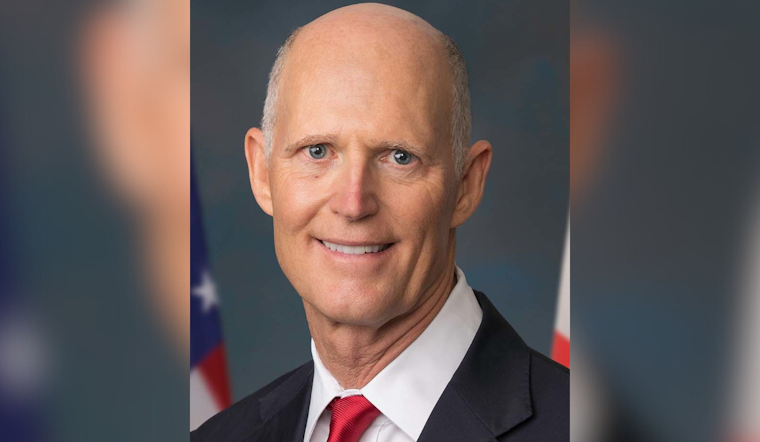
Florida Sen. Rick Scott is pushing the Justice Department to take a hard look at foreign-owned surrogacy operations, arguing they are being used as a back door to U.S. citizenship and could pose a serious national security threat.
In a letter sent Thursday, Scott and Arkansas Sen. Tom Cotton urged Florida Attorney General Pam Bondi to press the Department of Justice to investigate surrogacy centers they say are run by foreign nationals, with a particular focus on entities linked to China. The senators cited recent reporting that commercial surrogacy arrangements can be used to obtain U.S. citizenship for infants who are then moved overseas. They gave the DOJ a deadline of March 13 to provide a written response.
The letter and local coverage
Dated Feb. 26, the letter is posted online and lays out a three-part set of questions for federal prosecutors. Scott and Cotton want to know whether foreign-owned surrogacy agencies may have committed immigration fraud or human trafficking, and whether the DOJ has already flagged any potential violations of federal law.
According to Sen. Tom Cotton's office, the senators are also asking for an estimate of how many surrogacy clinics nationwide are owned or controlled by foreign nationals. The letter points to “recent reports” that it says identified more than 107 Chinese-owned surrogacy agencies operating in Southern California alone.
Orlando readers got an early look at the political push when local outlet West Orlando News published the letter and posted the full text.
What they're asking the DOJ to investigate
The senators are tying their request directly to Scott's SAFE KIDS Act, a bill he introduced in November that is framed as a legislative answer to what they describe as a criminal and national security problem. The proposal would void commercial surrogacy contracts involving citizens of U.S.-designated “adversarial” nations and would create penalties for brokers who facilitate those agreements.
As outlined in the bill text on Congress.gov, the SAFE KIDS Act would invalidate commercial agreements with citizens of foreign adversaries and impose misdemeanor penalties on brokers. In the Feb. 26 letter, Scott and Cotton ask the DOJ to respond with an assessment of any potential federal law violations tied to foreign-owned surrogacy operations and to provide a nationwide tally of clinics that are owned or controlled by foreign nationals.
Background: Arcadia case and wider reporting
The senators are not making their request in a vacuum. Their push follows high-profile coverage of opaque surrogacy operations in Southern California that drew the attention of child-welfare officials and federal law enforcement.
Reporting by The Wall Street Journal, along with a lengthy investigation in The New Yorker, detailed cases in which dozens of infants born through surrogacy were discovered living in a single Los Angeles-area home and later placed into foster care. The situation prompted FBI involvement and became a national flashpoint over how little oversight exists in parts of the surrogacy industry.
Those accounts undergird Scott and Cotton's argument that a largely commercial, often opaque system can create openings for deception, exploitation, and trafficking, especially when foreign ownership and cross-border arrangements are involved.
Legal implications and next steps
Legally, the senators are pressing on both criminal and regulatory fronts. Their letter asks whether Justice Department officials have identified violations such as immigration fraud, human trafficking, or failures to register as foreign agents. That list of potential issues is spelled out in the Feb. 26 request to Attorney General Bondi, as posted by Sen. Tom Cotton's office.
If the DOJ opts to open probes, federal investigators could coordinate with state child-welfare agencies and local law enforcement that are already involved in the Southern California cases highlighted in national reporting. The senators want answers on whether those kinds of operations are part of a broader pattern, not just an LA oddity.
For Floridians, the episode puts national security rhetoric directly up against family-building tools that are still mostly governed by state law. The SAFE KIDS Act remains pending in Congress, and the immediate question is whether the Justice Department treats Scott and Cotton's concerns primarily as a criminal enforcement issue or leaves the heavier lifting to lawmakers.
Either way, the DOJ's written response, due March 13, 2026, will signal how seriously federal prosecutors view the allegations about foreign-owned surrogacy clinics and their potential to be exploited.





_official_Senate_portrait_(cropped-1).jpg)