

























































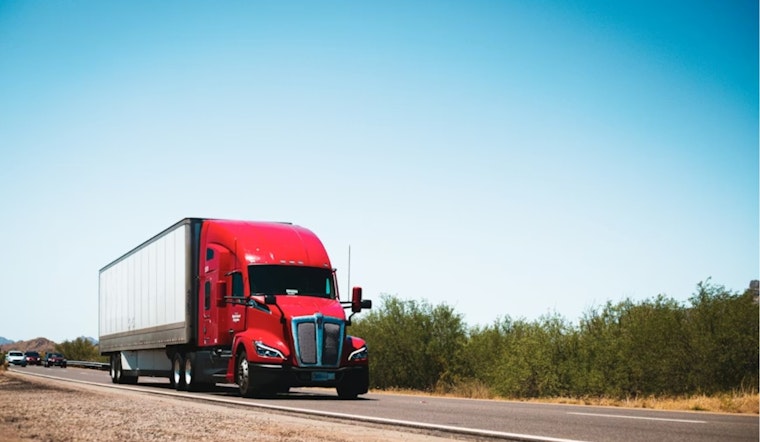
Driverless semis are already jockeying for space on Texas highways, and locals can now spot them rolling up and down I-45 between Dallas and Houston. From heavyweight player Aurora to smaller startups, companies are running cargo and oilfield tests to see whether autonomous big rigs can handle long-distance freight and punishing field work without a human at the wheel.
Aurora's Dallas-to-Houston launch
Aurora Innovation says it has started regular driverless customer deliveries between Dallas and Houston, with its Aurora Driver logging more than 1,200 miles with no human in the cab, according to Aurora. The company says it has completed a formal safety case for its initial phase and is working with launch partners including Uber Freight and Hirschbach Motor Lines as it ramps up capacity on the lane.
A bump in the road with OEM partners
The rollout has not been entirely drama free. Paccar, which builds some of Aurora’s test trucks, asked the company to put an “observer” back in the driver’s seat, Axios reported. Aurora says that person is there only as an observer and that the Aurora Driver is still responsible for the actual driving, but the episode underlines the tension between traditional manufacturers and the firms racing ahead on autonomous tech.
Who else is testing in Texas?
Startup Kodiak has shifted its focus from highway pilots to work closer to the oilfields, delivering driverless RoboTrucks for Atlas Energy Solutions to haul frac sand in the Permian Basin, TechCrunch and company notices show. Kodiak and Atlas say customer-owned RoboTrucks have already completed pilot loads, and they are pitching the Permian as a commercial test bed for off-road and short-haul driverless runs.
Industry timelines and the math
Analysts and companies are increasingly betting that fully autonomous Class 8 semis could be ready for broad deployment by 2027, a timeline reported by The Independent, which cites major reporting on the sector. That same reporting highlights the cold financial logic behind the push. Drivers are one of the biggest costs in long-haul trucking, and shippers see autonomy as a way to trim per-mile expenses in an industry that pulls in hundreds of billions of dollars in revenue every year.
Safety worries and union pushback
Labor and safety advocates are not exactly cheering from the sidelines. The International Brotherhood of Teamsters has pressed regulators to hold autonomous vehicle firms to account, arguing that failures of self-driving systems have already led to crashes and property damage, according to a Teamsters statement. Researchers have also pointed to issues such as “phantom braking,” and, as The Independent relays, experts including Missy Cummings have warned there is “no identified solution on the horizon” for some perception-related errors.
What this means locally
For people moving between Dallas and Houston, the most visible change will be more autonomous trucks running established freight corridors and new terminals popping up near major interstates. Companies say they are working with federal and state agencies as they scale up, and local drivers and carriers can expect more test runs, more overnight freight movements and a continuing fight over safety rules, jobs and roadside procedures as fleets expand.
The technology is already reshaping the freight landscape. Some loads are moving with no human in the truck at all, others still have observers in the cab, and companies, regulators and unions are wrestling over how fast to go and what safeguards are needed. Texans should brace for more pilots and louder policy battles over the next year as firms push for wider commercial service on the state’s highways.



