

























































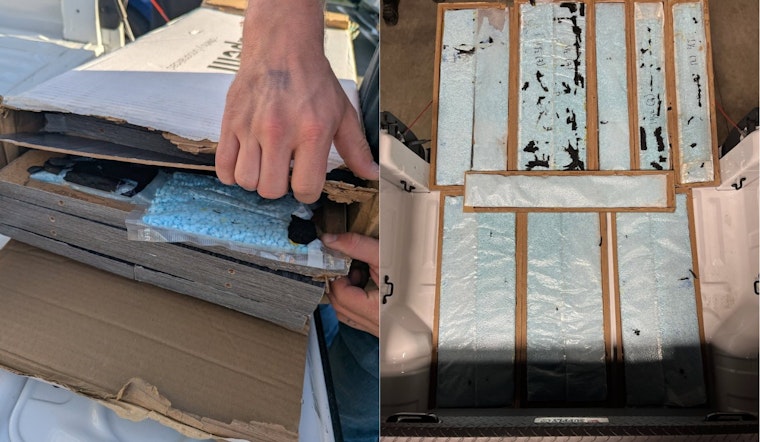
Federal and local agents in Salt Lake City said Monday that the Wasatch Metro Narcotics Strike Force executed a search warrant that turned up roughly 240,000 fentanyl pills hidden inside pieces of furniture. Authorities called the haul one of the larger local seizures in recent months and said it amounted to a significant disruption of an alleged trafficking operation.
In a post by the FBI Salt Lake City, the agency credited the Wasatch Metro Narcotics Strike Force with carrying out the warrant and wrote, “Every pill seized is a life potentially saved.” The post did not share operational details beyond the size of the seizure.
Task Force Activity and Recent Big Hauls
The Wasatch Metro unit pairs FBI agents with local strike forces and has been behind multiple large busts in the District of Utah, according to the U.S. Department of Justice. Local coverage has highlighted other sizable finds, with KSL reporting about 100,000 fentanyl pills seized in a West Valley City bust in September 2025.
Why the Seizure Matters Locally
Public-health data show what is at stake. The Utah Department of Health and Human Services reports that as of 2025, roughly 10 Utahns die each week from drug overdoses, with fentanyl involved in a substantial share of those deaths. The same dashboard notes that methamphetamine surpassed fentanyl in 2024 as the single most commonly involved drug in overdose fatalities, underscoring how quickly the state’s overdose crisis can shift.
Legal Implications
Seizures of this scale are typically part of ongoing criminal investigations and can lead to federal counts such as possession with intent to distribute or conspiracy, as past District of Utah cases cited by the U.S. Department of Justice show. The FBI’s social post did not identify suspects or list charges in this case, according to FBI Salt Lake City, and any indictments will depend on what investigators can document during the probe.
Resources and Next Steps
Public-health officials continue to urge residents to carry naloxone and to use state treatment and prevention resources. Stop the Opidemic and the state overdose dashboard lists naloxone distribution points along with treatment options. Investigators say this latest seizure has disrupted supply networks, while public-health leaders stress that enforcement needs to be paired with prevention and treatment if the state hopes to reduce overdose deaths in the long run.





