

























































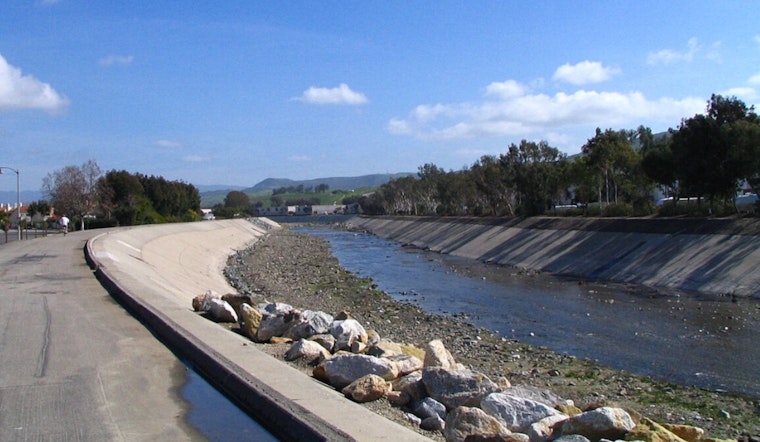
What started as one runner’s nagging concern about dead-looking creek banks in San Juan Capistrano has turned into a countywide fight over herbicides, flood control, and who gets to decide what a “healthy” waterway looks like.
Runner Brent Linas began posting photos of brown reeds and a noticeable lack of birds along his usual route. His casual running log quickly morphed into Creek Team OC, an effort that leans on public-record requests and Instagram posts to track chemical treatments in San Juan and Trabuco creeks. The work has forced county officials to publicly explain why so many concrete-lined channels now look, in residents’ words, lifeless. The argument has spilled out from the creek banks to Doheny State Beach and has pulled in surfers, parents, and county supervisors.
Documents Show Spray Plans Spanning the County
Residents say records they obtained show herbicides were used in 2024 to “eradicate nuisance weeds” and that Orange County plans to treat more than 2,000 acres of channels and basins in 2026, including stretches of the Santa Ana River and Aliso Creek. State filings flagged the county’s 2024 reports as “incomplete, inaccurate, or inconsistent,” a red flag that residents and environmental observers quickly highlighted. Those findings were detailed by the Los Angeles Times.
Town Hall Spotlight and Supervisor Pressure
According to Voice of OC, Supervisor Katrina Foley responded by organizing a town hall in Dana Point that brought together OC Public Works, the county agricultural commissioner, the health agency, and a vocal crowd of residents. Foley told the audience she wants the county to “try to find every possible way that we can avoid using chemicals” and asked staff to seriously explore alternatives like hand weeding or using grazing animals in limited spots.
Organizers acknowledged that the meeting cleared up some confusion, but they also said it did not satisfy calls for more transparency or for a concrete roadmap to move away from routine broad spraying.
County Says It Is About Flood Safety First
County officials have consistently framed herbicide use as a flood-control job, not a beautification choice. They argue that vegetation has to be tightly managed so storm channels can carry water safely during heavy rains.
“Vegetation management in flood control channels is conducted to maintain flood protection capacity and protect public safety,” a county spokesperson told reporters, according to reporting by the Los Angeles Times. Officials also note that the products are approved by state and federal agencies and say crews avoid work during bird nesting season and sensitive fish-spawning windows whenever possible.
Grassroots Push, Instagram Receipts, and a Petition
Linas and other residents have collected work orders, contractor photos, and county correspondence, then posted them publicly on Instagram and bundled them into community toolkits meant to demand clearer answers from the county. As reported by Voice of OC, the account quickly attracted thousands of followers. Organizers also launched a Change.org petition that urges the county to halt the use of glyphosate and other toxic herbicides in creeks that ultimately drain into the ocean. The petition and related documents are posted on Change.org.
What State Regulators Are Watching
The California State Water Resources Control Board oversees aquatic pesticide discharges and requires permits and reporting when pesticides are applied to waters of the United States. The board’s NPDES pesticide program explains that statewide pesticide permits and an ongoing effort to consolidate those permits set the conditions and reporting rules that local agencies must follow. That framework means county herbicide treatments are subject to state oversight and possible enforcement.
Residents say those rules give them a lever to demand clearer public notice and stronger monitoring. County staff says they will focus on ensuring compliance with state requirements.
The town hall did not settle the fight. Activists plan to keep filing records requests and pushing for nonchemical approaches, while county officials say they will review current practices and how the public is notified before spraying. For now, the conflict remains intensely local, unfolding along the creek banks, inside county meeting rooms, and out on the beach, while Orange County wrestles with how to balance flood safety against coastal ecosystems and community health.





